The Bivouac at 8,100 Metres: The K2 Summit That Took Fifty Years to Settle
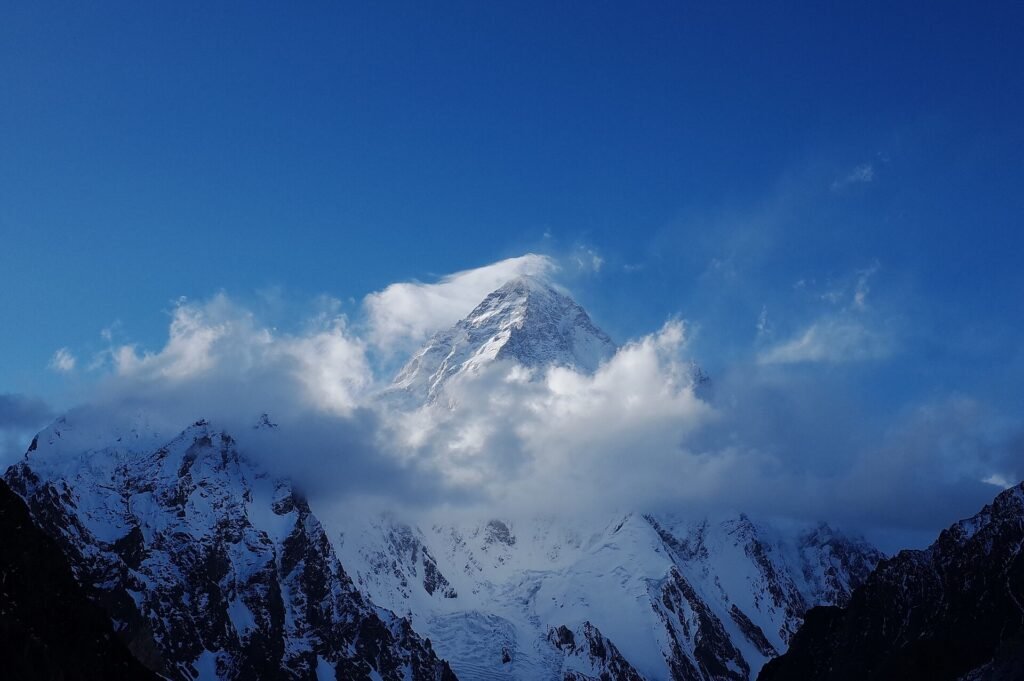
On 31 July 1954, Achille Compagnoni and Lino Lacedelli stood on the summit of K2. Italy had its mountain. The expedition, led by the geologist Ardito Desio, returned to a country ready to celebrate, and the two summiteers became national figures.
The more interesting story happened several hundred metres lower, the night before, to two men who did not reach the top.
An expedition that was not only about a summit
Desio was a scientist first. The 1954 expedition carried a substantial research programme in geology, glaciology, cartography and human physiology, and it produced a body of survey work that outlasted the argument it started. This matters to what followed, because it shaped the expedition’s command structure: it was organised as a national scientific undertaking with a director at the top, not as a group of climbers deciding things together.
In that structure, the summit was an output to be delivered. Who delivered it, and at what cost to whom, became an administrative question as much as a mountaineering one.
The carry
The summit pair needed oxygen, and the oxygen was below them. Carrying it up on 30 July were Walter Bonatti, then twenty-four and the strongest climber on the expedition, and Amir Mehdi, a Hunza porter who had already proved himself in the Himalaya the previous year.
The plan was straightforward: haul the bottles to Camp IX, hand them over, descend. It failed on the first term. When Bonatti and Mehdi reached the height where the camp was supposed to be, it was not there. The tent had been pitched higher, and off to one side.
They shouted into the dusk. Voices came back, telling them to leave the loads and go down. By then it was dark, they were above 8,000 m, and going down was no longer something two men could safely do.
The night
So they stopped where they were, at roughly 8,100 m, and stood out the night. No tent. No sleeping bags. No oxygen, because the oxygen was the cargo and the cargo was not theirs to open.
Bonatti survived it more or less intact. Mehdi did not. He had come up in boots never meant for a night in the open at that height, and he came down with his feet destroyed. He lost his toes. He never climbed again.
Above them, in the morning, Compagnoni and Lacedelli collected the bottles and went to the summit. Their oxygen, by their own account, ran out before the top. They continued without it and got there.
The accusation
That last detail became the fight. If the sets had been full when the summit pair started, the reasoning went, they should have lasted longer than they did. An explanation was offered: Bonatti must have used some of the oxygen during the night.
It was a serious charge. It recast Bonatti from a man who had performed an extraordinary carry and survived an unplanned bivouac into a man who had endangered the summit attempt and then concealed it. He spent decades contesting it, in print and eventually in court.
The counter-argument was mostly physical. The oxygen sets of the period required a mask and specific fittings, and the notion that two exhausted men could tap sealed apparatus in the dark at 8,100 m, then reseal it, did not survive close inspection. Nor did the timeline. And there was the plainest evidence of all: had Bonatti breathed oxygen that night, both Mehdi’s feet and Bonatti’s own condition would have looked very different than they did.
The correction
The reckoning came slowly. In 2004, on the fiftieth anniversary, the Italian Alpine Club commissioned a review of the expedition’s records. Its conclusions substantially supported Bonatti’s account: the camp had been moved, the two men had been left in an impossible position, and the accusation against Bonatti did not stand.
Fifty years is a long time to be called a liar about the worst night of your life. Bonatti had by then long since walked away from Himalayan climbing, having produced some of the finest solo alpinism of the century in the intervening decades, including a winter solo on the north face of the Matterhorn. He died in 2011, his account intact.
The man the story forgot
Bonatti at least had a platform. Amir Mehdi did not.
He was a porter from Hunza, and in the accounting that followed he appears mostly as a complication in someone else’s narrative: the man who slowed things down, the man who had to be carried out, the man whose feet were a problem. He had gone as high as any of them, carried more than most, and paid the highest price of anyone on the mountain that summer.
He returned to Hunza and lived for decades afterwards, largely unremarked outside his own valley. His name is now attached to the story properly, and the recognition arrived late enough to be of no use to him. It is a pattern the Karakoram repeats. The Italians got a mountain and a myth. Mehdi got frostbite and a footnote, and the footnote took longer to correct than the myth took to build.
What 1954 actually proved
K2 was climbed, and that is the line in the record books. But the durable lesson of 1954 is not about summit technique. It is about what happens when an expedition’s internal account of itself is allowed to become the historical record without challenge.
The archives assembled by bodies such as the American Alpine Club exist partly for this reason: they preserve competing accounts rather than a single official one. Mountaineering runs on testimony, because there are rarely witnesses above the last camp. Testimony can be checked, but only if somebody keeps the documents, and only if somebody eventually bothers to look.
It took fifty years on K2. The mountain kept its silence throughout, as it does.