Rescue team reaches Broad Peak base camp with body of renowned climber Nirmal Purja killed in avalanche
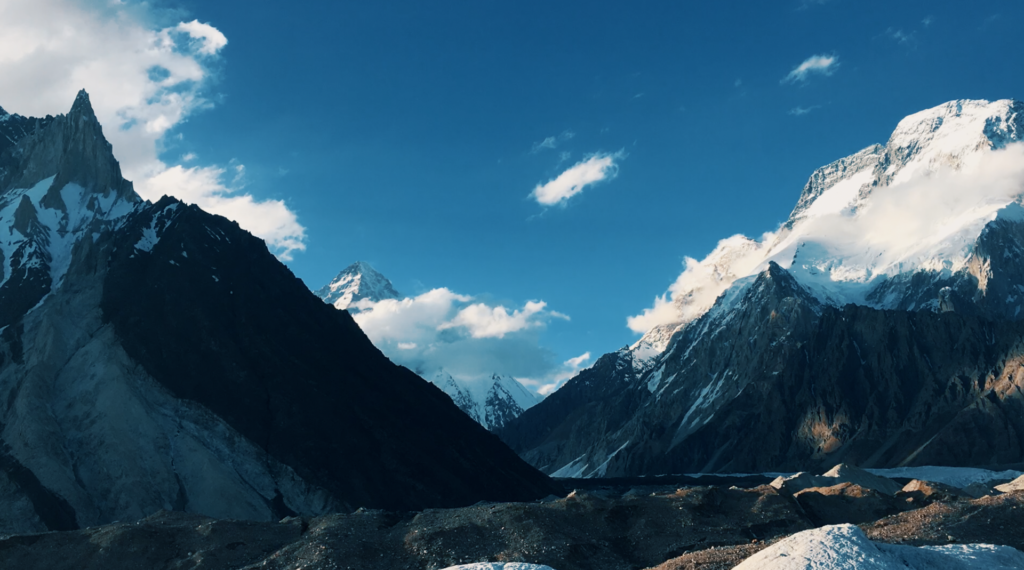
An avalanche swept down Broad Peak on the morning of Thursday, July 30, 2026, hitting all ten climbers who were on the mountain’s normal route pushing toward the summit. The ten belonged to four separate expedition teams, and by the weekend rescuers had recovered seven bodies, including that of mountaineer Nirmal Purja, while three climbers remained unaccounted for Gripped.
What happened
The avalanche struck at around 6,600 metres (21,654 feet), on the stretch of fixed ropes between Camp II and Camp III, according to Desnivel Desnivel. ExplorersWeb and Outside likewise reported that all ten climbers on the mountain that day were caught, representing four independent expedition companies travelling on broadly similar schedules ExplorersWeb Outside. GPS data cited by Outside showed the four teams together at Camp II at 5:33 a.m. on July 30, moving upward by 7:30 a.m., with Purja’s tracker recording 21,847 feet shortly before 9 a.m. — the highest point reached by any member of the group that morning. Around 9 a.m., Jenjen Lama, a Seven Summit Treks guide climbing toward Camp II on nearby K2, reported seeing a large avalanche on Broad Peak, which he described as larger than any he had previously witnessed in that area. His radio calls to two of the climbers went unanswered, and he said he initially assumed their radios had simply been switched off to conserve battery. By that afternoon, Lama learned from Mingma Gyalje Sherpa and from Seven Summit Treks headquarters in Kathmandu that GPS trackers showed several climbers had dropped more than 5,000 vertical feet to the base of the mountain.
The people involved
Among those killed were Nirmal Purja, 43, an owner of the company EliteExped and a climber previously known for an 8,000-metre speed record, and his longtime climbing partner Pur Bahadur “Yukta” Gurung, 37, alongside guide Nima Sherpa, 36 ExplorersWeb Outside. Purja had reportedly been attempting to become the first person to climb all fourteen peaks above 8,000 metres without supplemental oxygen twice, with only Cho Oyu (26,864 feet) remaining after Broad Peak, according to Outside. Gurung, from Gorkha, had begun work as a porter in 2009 and gone on to complete 28 ascents above 8,000 metres, including roughly ten of Everest, per Desnivel Desnivel. A Seven Summit Treks team supported Nadhira Al Harthy, from Oman, reported as 48 by Outside and 47 by Desnivel, who had become the first Omani woman to summit Everest in 2019 and was pursuing her own 14-peak record. Her guides were Gyaljen “Gyalu” Sherpa, whose age was given inconsistently as 47 and 46 within the same Outside report, and Nawang Thindu Sherpa, 28, described as the youngest climber on the mountain that day. A third team from Imagine Nepal included guide Kili Pemba Sherpa, known as “Kilu,” reported as 45 by Outside and 46 by Desnivel, supporting Chinese climber Wang Zhong, who was reportedly nearing the completion of his own 14-peak quest. Reports also diverged on Kilu’s Everest record, with Outside citing 20 summits and Desnivel citing 15. A fourth team consisted of Pakistani guide Sohail Sakhi, 33, from Hunza in Gilgit-Baltistan, and American client Sarah Mallory Geis, 39, organised through Sakhi’s company Moving Mountains; Desnivel reported that Geis had recently left her job to pursue mountaineering and was attempting her first peak above 8,000 metres.
The response
EliteExped confirmed the deaths of Purja and Nima Sherpa in a statement saying other members of the expedition had not survived, according to ExplorersWeb ExplorersWeb. ExplorersWeb reported that EliteExped’s confirmation of further deaths went against the specific request of Pakistani authorities and the Alpine Club of Pakistan, who had said they would only confirm fatalities once bodies were located and identified. The Alpine Club of Pakistan said rescuers had at one stage spotted five bodies in an area it described as dangerous, where recovery could carry high risk, and that it would assess the situation before deciding its next move. Naila Kiani of the Alpine Club told ExplorersWeb that a long-line helicopter operation was not currently an option, as military helicopters do not perform that type of manoeuvre, though a special request could be made. On July 31, two Pakistan Army helicopters searched the mountain while a joint Pakistani-Nepali ground team recovered the bodies of Al Harthy and Gurung along with a detached limb later identified as belonging to Geis, Outside reported Outside. Social media speculation arose after screenshots appeared to show slight movement in Purja’s GPS tracker, but helicopters returned to Skardu without locating survivors. That same afternoon, Mingma Gyalje Sherpa and Nepali rescuers used commercial drones borrowed from climbers on K2 to spot a cluster of five bodies at around 19,350 feet, including Purja, identified by his teal down suit, as well as one isolated body on a cliff band above 19,600 feet. On August 1, Mingma G and senior guide Shirbaz Khan assembled a nine-member recovery team and established a temporary advanced base camp; by the morning of August 2 the team confirmed the cluster of five bodies as Purja, Nima Sherpa, Wang Zhong, Kilu and Gyalu Sherpa. Sakhi’s backpack and tracker were found at the base of the mountain, leading rescuers to conclude that the isolated body above was Nawang Thindu Sherpa. Attempts to recover his body on August 2 by Seven Summit Treks climbers “Speed” Dawa Sherpa and Pem Dorje Sherpa were hampered when 1,000 feet of rope ran out short of the body; the pair descended, borrowed an additional 350 feet, and on a second attempt ran out of rope again at a crevasse before hearing another avalanche directly above them in the couloir. Pem Dorje Sherpa said the operation really required eight people, though only two were available. Gripped reported that seven bodies were eventually brought down to Broad Peak base camp, with three climbers — Sakhi, Gyalu Sherpa and Nawang Thindu Sherpa — still missing, and that the Alpine Club of Pakistan described the mission as exceptionally challenging and technically demanding, crediting Pakistani and Nepali climbers for their roles and thanking the Pakistan Army, government bodies, the British High Commission and the Embassy of Nepal Gripped. Desnivel, however, reported that all ten deaths had been confirmed following the recovery of all bodies, a claim that stands at odds with the Gripped and Outside accounts of three climbers remaining missing Desnivel. The search was interrupted by bad weather on the night of July 31 into August 1 before resuming.
Background and context
The climb had begun on the morning of July 28, when the ten set out from Broad Peak base camp, at roughly 16,000 feet, on fixed ropes toward Camp I at 18,500 feet, on one of the first clear days following a week-long storm with heavy snowfall from July 22 to 26, according to Outside Outside. It was the second wave of summit attempts of the season, after a first group had gone for the top around ten days earlier, in mid-to-late July. Jenjen Lama told Outside that climbers are generally advised to wait five days after snowfall, but that weather windows in the Karakoram are often too narrow, forcing a “fifty-fifty” gamble. American climber Napier Fuller, part of that earlier wave, described the route as dangerous, citing heavy rockfall, and said he was struck in the head hard enough to dent his helmet. Outside also noted that Karakoram expeditions depend on satellite communication rather than Starlink because of the absence of cell or internet service, and that base camps typically rely on radio rather than live access to GPS trackers.
What is not yet confirmed
It remains unclear whether all ten bodies had in fact been recovered, as Desnivel reported, or whether three climbers — Sakhi, Gyalu Sherpa and Nawang Thindu Sherpa — remained missing, as Gripped and Outside reported Gripped Outside Desnivel. The precise ages of Gyalu Sherpa and Kilu, and the exact number of Kilu’s Everest ascents, were reported inconsistently within the same account and have not been reconciled. Whether a long-line helicopter operation was ultimately requested or carried out has not been confirmed ExplorersWeb. The Alpine Club of Pakistan said it remained committed to continuing recovery efforts for the missing climbers when conditions allow, but no timeline for further attempts had been given.
Sources referenced
- EliteExped Confirms Nirmal Purja Dead on Broad Peak — ExplorersWeb
- Body of Famed Mountaineer Recovered from Broad Peak — Gripped
- What Really Happened on Broad Peak, the Deadliest High-Alpine Avalanche in More than a Decade — Outside
- Las diez víctimas mortales de la avalancha del Broad Peak — Desnivel
Written by Andoram by combining 4 independently published reports, each linked above. We synthesise facts and reproduce no source text.
Coverage timeline
- Rescue team reaches Broad Peak base camp with body of renowned climber Nirmal Purja killed in avalanche — The Express Tribune, 5 Aug 2026, 16:16 UTC
- Pakistan team reaches base camp with body of renowned climber killed in avalanche — france24.com, 5 Aug 2026, 07:00 UTC
- Broad Peak avalanche: Rescue team still unable to reach site where body was found — Ekantipur, 2 Aug 2026, 07:00 UTC
This page is an automatically compiled index of third-party reporting. Headlines and links belong to their publishers; Andoram reproduces no article text. Last compiled 13 Sep 2026 03:45 UTC.