Thomas Huber Clears Up Doubts About His Latest First Ascent in Pakistan
Three separate items from the climbing world surfaced this week: a disputed new-route claim on a Himalayan granite tower in Pakistan, a boulder problem climbed by Adam Ondra near Paris, and a fall sustained by a professional climber onto his belayer during a headpoint attempt in a Scottish quarry. Each was reported by a different outlet, and each carries its own open questions.
What happened
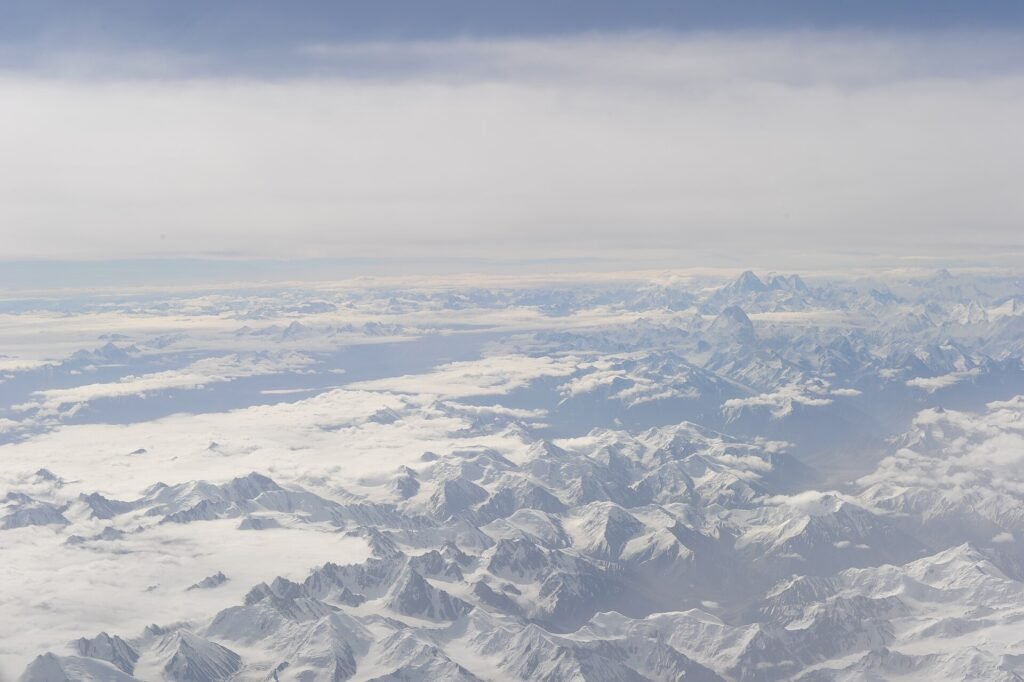
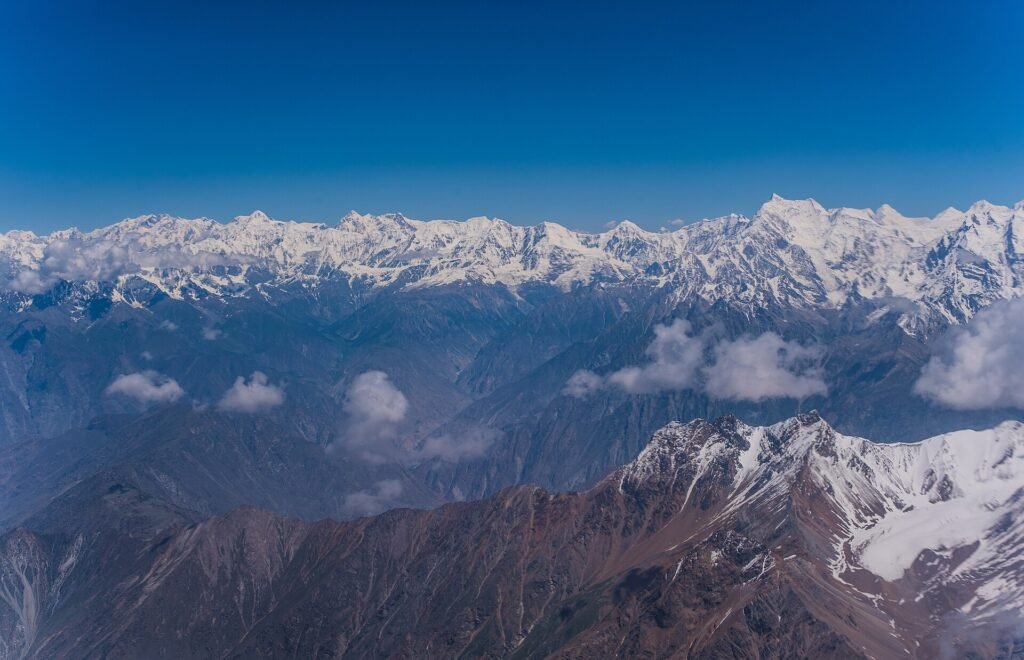
ExplorersWeb reported that Thomas Huber, Victor Sans and Miquel Mas completed a new route on Biacherahi Central, a 5,700m (18,700ft) peak in Pakistan’s Choktoi area ExplorersWeb. The climbers named the line “Wild Soul,” a 600m route of 21 pitches with difficulties up to 7a A2+, climbed over four days from August 1 to 4. According to ExplorersWeb, the team released its account only after returning home, following several days of stormy weather and a five-day window that allowed the climb to be finished. The team describes the ascent as a first ascent of Biacherahi Central, but ExplorersWeb noted that a 2002 report in the American Alpine Journal suggests other parties reached the peak earlier, and that readers pointed to a 2001 ascent by a Polish-Japanese team led by Voytek Kurtyka.
Separately, Gripped reported that Adam Ondra made a first ascent of a boulder problem he called “Little Boy du Fond” at Toit d’Orsay, a sector considered part of Fontainebleau and close to Paris Gripped. Ondra graded the climb V14/15 (8B+/C). Gripped described how the problem emerged from an attempted flash of an existing line, La Force (V14), whose original version no longer exists after a large flake broke away and raised the start. Ondra’s flash attempt stalled at a crux shoulder move partway through the roof; after sending that move, he continued through a harder exit, substituting “Trinity” (V10) for the usual “Morpheus” (V9), producing the new problem. Gripped noted the line includes 360-degree rotations, a dynamic move to a gaston, and a rest of roughly 41 seconds in a bat hang. Ondra also climbed “Vertical Art” (V13) the same day, according to Gripped, which reported this came the day after he competed in the European Championships.
Rock and Ice reported that professional climber Mat Wright fell an estimated 26 feet (8m) onto his belayer, his fiancée Anna Taylor, while attempting a new route in a quarry in Scotland on the evening of August 29 Rock and Ice. The fall happened as Wright tried to clip his next piece of protection; it pulled a cam from the crack below him, though a lower piece held and arrested the fall. Rock and Ice said the incident occurred between roughly 8:30 and 9 p.m., during what Wright intended as his final attempt of the day.
The people involved
Victor Sans and Miquel Mas, who climbed the new Biacherahi Central route, are from Spain, while Thomas Huber is German, according to ExplorersWeb ExplorersWeb. ExplorersWeb detailed Huber’s record in the wider Latok–Ogre region, including a 1997 ascent of Latok II with Conrad Anker, Toni Gutsch and his brother Alexander Huber, a 1999 summit of Latok IV, ascents of the Ogre and Ogre III in 2001, and repeated attempts on the north face of Latok I that have not succeeded. ExplorersWeb also noted that in 2025 Huber opened a new route on the northern tower of Suma Brakk with Americans Jon Griffin and Tad McCrea, and that Mas opened a route on the southwest face of nearby Latok II with Marc Subirana in 2023.
Gripped’s report placed Ondra’s Fontainebleau session in the context of the European Championships, where he finished second in the semifinals, just behind Alberto Ginés López, and fourth overall, one point behind Sam Avezou Gripped. Ginés López won his first European Championship gold, with Gio Placci taking silver, Gripped reported. Ondra had said he had been ill and unable to climb for a week, two weeks before the competition.
Rock and Ice described Wright as a climber who has reached grade 9a (5.14d) and who works as a climbing coach, and said he had been developing the Celtic Crack project for about a year, trying the line 40 to 50 times on top rope solo before his third proper lead attempt on August 29 Rock and Ice. Taylor, his belayer, was using a Grigri and tried to take in slack quickly as he fell.
The response
ExplorersWeb’s account shows the first-ascent claim on Biacherahi Central being contested almost immediately by readers citing earlier AAJ records, prompting Huber to clarify that the Biacherahi group contains several summits: Biacherahi South, Biacherahi Central and Biacherahi Tower, with the latter, at around 5,900m (19,400ft), being the highest ExplorersWeb. Huber said Biacherahi Central is itself a three-summit formation, and that its southernmost, lowest summit was climbed in 1989 by Jon Lazkano and Javier Mugarra of Spain and again in 2001 by Kurtyka’s team, distinguishing that earlier ascent from the central summit reached by his own party.
Rock and Ice reported that Wright called for an ambulance, worried Taylor had broken her back, but after waiting an hour with no rescue personnel dispatched, the pair evacuated the quarry themselves to reach a hospital Rock and Ice. Taylor sustained a cracked rib, while her head, neck and back were not injured, according to Rock and Ice. Wright has since returned to the quarry to reassess gear placement and clean out the crack, said he does not currently feel ready to safely lead the route, and said Taylor will not be belaying him on Celtic Crack again.
Background and context
The Biacherahi Towers sit beside the Choktoi Glacier, next to the Latok group and near Baitha Brakk, known as The Ogre, according to ExplorersWeb ExplorersWeb. The team’s base camp was established at 4,400m (14,400ft) from mid-July. Rock and Ice reported that Wright’s route follows a thin flared crack on dolerite rock at Cambusbarron Quarry, about an hour northeast of Glasgow, and that he expects the eventual grade to fall around 8c+/9a (5.14+), though he has not finalised it Rock and Ice. Rock and Ice also detailed the mechanics of the fall: on his first attempt that evening Wright pulled through the crux but fell on a foot sequence afterward, caught by a.2 cam; he fell again in the same spot; on the third attempt, after placing a.1 cam and pulling up rope to clip it, his hand slipped, and the next piece down, a yellow Z4.2 cam, failed before a 0.2/0.3 offset cam held. Wright noted a weight difference of around 22lbs (12kg) between himself and Taylor, that he wore a helmet while she did not, and that only a narrow 2.54cm window exists in the 8mm-wide crack for the critical placement.
What is not yet confirmed
ExplorersWeb’s reporting leaves open whether Huber, Sans and Mas’s route on Biacherahi Central’s central summit constitutes a first ascent of that specific point, given the conflicting AAJ records and reader claims about the 2001 Kurtyka-led ascent ExplorersWeb. Gripped did not report whether Little Boy du Fond has received independent repeats or confirmation of its proposed grade Gripped. Rock and Ice did not specify the cause of the ambulance delay, and Wright’s account of why the failed cam may have rotated out of the crack remains a suspicion rather than a confirmed explanation Rock and Ice. The final grade Wright will assign to Celtic Crack, and the timing of any future lead attempt, also remain undetermined.
Sources referenced
- Thomas Huber Clears Up Doubts About His Latest First Ascent in Pakistan — ExplorersWeb
- Adam Ondra Makes First Ascent of V14/15 in Fontainebleau — Gripped
- Climber Decks Onto Belayer on First Ascent Attempt in Scotland — Rock and Ice
Written by Andoram by combining 3 independently published reports, each linked above. We synthesise facts and reproduce no source text.
Coverage timeline
- Climber Decks Onto Belayer on First Ascent Attempt in Scotland — Rock and Ice, 4 Sep 2026, 09:02 UTC
- Adam Ondra Makes First Ascent of V14/15 in Fontainebleau — Gripped, 2 Sep 2026, 18:36 UTC
- Thomas Huber Clears Up Doubts About His Latest First Ascent in Pakistan — ExplorersWeb, 2 Sep 2026, 08:05 UTC
This page is an automatically compiled index of third-party reporting. Headlines and links belong to their publishers; Andoram reproduces no article text. Last compiled 5 Sep 2026 09:00 UTC.