Climber Falls to Death on Ama Dablam
German climber Wolfgang Waschiczek, 57, died on Ama Dablam (6,812m/22,349ft) after falling roughly 1,700 metres (5,577ft) during his descent from Camp III, according to ExplorersWeb and Gripped ExplorersWeb Gripped. His body was recovered by helicopter search teams on the afternoon the search began, at an altitude of around 4,500 metres (14,764ft). The fatality came as a large wave of climbers moved through the mountain’s fixed ropes during the closing weeks of October.
What happened
Waschiczek reached the summit of Ama Dablam on 25 October, according to both ExplorersWeb and Gripped ExplorersWeb Gripped. Rather than continuing straight down afterward, he and his guide stopped for the night at Camp III, borrowing a sleeping bag and other gear from fellow climbers already camped there. The following morning the pair began preparing to resume their descent. Gripped reported that, according to Bodhraj Bhandari, managing director of Snowy Horizon Treks, Waschiczek lost contact with his guide at around 8am on 26 October while the two were readying to descend from an altitude of approximately 6,200 metres (20,341ft). The guide had asked Waschiczek to wait while he returned the borrowed sleeping bag to the tent it had come from. Per Gripped’s account of Bhandari’s version, the guide was gone for less than five minutes before finding that Waschiczek was no longer where he had left him. ExplorersWeb’s account states simply that when the Sherpa returned, Waschiczek could not be found. The two outlets diverge on a physical detail: ExplorersWeb reported that Waschiczek’s crampons were left behind, which it suggested pointed to a freak fall, while Gripped reported that he was found not wearing crampons.
The people involved
Waschiczek’s guide is named differently across the two outlets covering the incident: ExplorersWeb identifies him as Sonam Sherpa, while Gripped identifies him as Sonam Lama ExplorersWeb Gripped. Waschiczek’s expedition was outfitted by Real Himalaya Nepal, whose managing director, Gokul Thapa, confirmed the fall and the approximate 1,700-metre distance involved, as reported by Gripped. ExplorersWeb’s account draws on Real Himalaya Nepal’s comments to The Tourism Times. Gripped’s reporting also drew on details from Bodhraj Bhandari of Snowy Horizon Treks. This was, according to Gripped, the first fatality recorded on Ama Dablam during the current climbing season.
The response
A search helicopter was dispatched to locate Waschiczek after he went missing during the descent, according to ExplorersWeb ExplorersWeb. His remains were located at around 4,500 metres (14,764ft), with the recovery completed the same afternoon the search got under way, per ExplorersWeb’s timeline Gripped.
Background and context
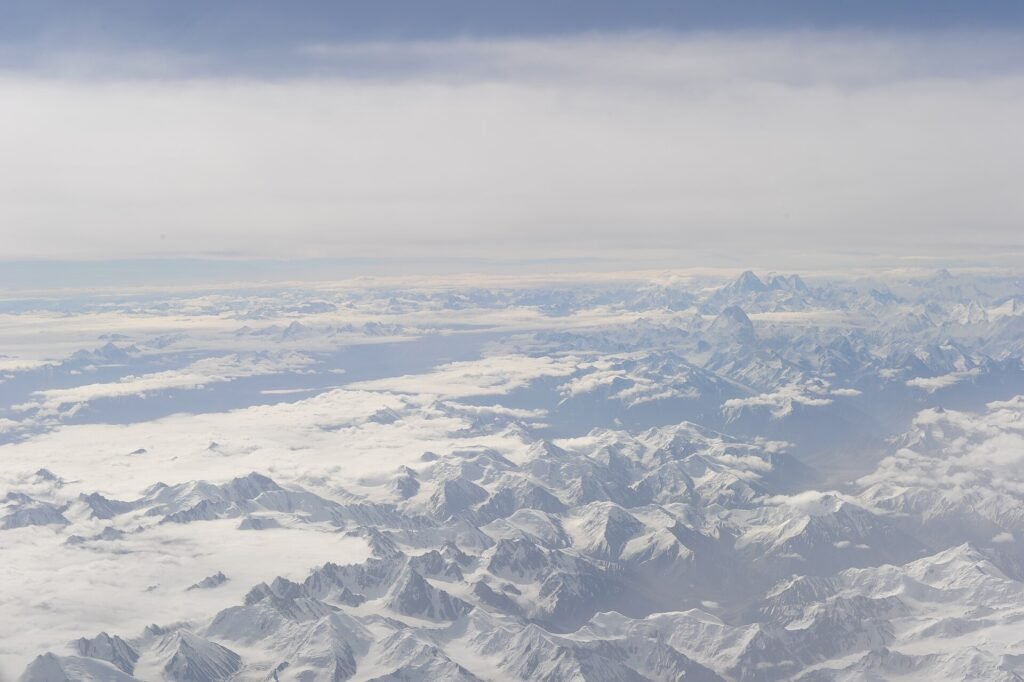
Ama Dablam sits in Nepal’s eastern Himalayas, within the Khumbu region near Everest, and is recognised for its steep ridgelines and dramatic rock and ice walls, as described by Gripped Gripped. The mountain, along with Manaslu, is described by ExplorersWeb as among the most popular peaks climbed in Nepal during the autumn season ExplorersWeb. Nepal’s Department of Tourism recorded, in an update dated 17 October, that more than 300 foreign climbers had applied for permits to attempt Ama Dablam this season, a figure corroborated separately by Gripped. The rope-fixing team opened the summit route on 17 October, and ExplorersWeb reported that a substantial summit push began only a few days afterward. ExplorersWeb also reported that more than 200 climbers lined up toward the summit over the preceding weekend, and local media cited by the outlet estimate that over 200 climbers, both Nepali and foreign, have summited the mountain so far this season. ExplorersWeb also noted that almost all foreign climbers on Ama Dablam are accompanied by one or two Sherpa guides, and that further expedition teams were expected to attempt the summit through the remainder of October and into November.
Elsewhere in Nepal’s mountaineering community this autumn, the Kathmandu Post reported on a memoir launch tied to broader questions of guiding practice and worker welfare in the Khumbu region. Melissa Arnot Reid held the Nepal launch of her memoir, “Enough: Climbing Toward a True Self on Mount Everest,” at Le Sherpa Restaurant in Maharajgunj, Kathmandu, an event hosted by the Pasang Lhamu Foundation, named for the first Nepali woman to summit Everest, who died during her 1993 descent The Kathmandu Post. Reid first travelled to Nepal in 2008 as a 23-year-old assistant guide on an Everest expedition, having already guided for three years, and summited Everest on that first attempt. The Kathmandu Post’s account states in one place that she returned to Nepal every spring for the following 18 years, and elsewhere that she returned every spring for nine consecutive years, a discrepancy the source does not reconcile. Reid has since summited Everest six times and, in May 2016, became the first American woman recorded to summit and descend without supplemental oxygen, the seventh woman overall to do so. In 2012 she co-founded the Juniper Fund, which supports families of mountain workers killed on the job, a project she traced to the 2010 avalanche death of Chhewang Nima Sherpa on Baruntse in the Khumbu region, whom she had met two years earlier when he already held 19 Everest summits. The fund currently supports 88 families, amounting to roughly 300 people. At the launch, Reid said she believes high-altitude mountaineering in Nepal should be managed by Nepalis, and proposed a short safety briefing for all climbers covering fixed lines, waste management at Camp II, expectations during incidents, and rescue procedures for both climbers and local workers.
What is not yet confirmed
The name of Waschiczek’s guide remains unresolved, with ExplorersWeb and Gripped giving different names for the same individual ExplorersWeb Gripped. Whether Waschiczek was wearing crampons at the time of the fall is also disputed between the two outlets, one stating they were left behind and the other that he was found without them. The precise mechanism of the fall, and what happened in the minutes after he was last seen waiting near Camp III, has not been detailed beyond the guide’s brief absence. The Kathmandu Post’s own account contains an internal inconsistency over whether Reid returned to Nepal for nine or 18 consecutive spring seasons, which has not been clarified The Kathmandu Post.
Sources referenced
- Climber Falls to Death on Ama Dablam — ExplorersWeb
- Climber Dies After 1,700-Metre Fall in Himalaya — Gripped
- She climbed Everest without supplemental oxygen. But the summit was never the point — The Kathmandu Post
Written by Andoram by combining 3 independently published reports, each linked above. We synthesise facts and reproduce no source text.
Coverage timeline
- Summit Traffic: Climbers Queue Up on Ama Dablam — Gripped, 28 Oct 2026, 14:56 UTC
- She climbed Everest without supplemental oxygen. But the summit was never the point — The Kathmandu Post, 27 Oct 2026, 02:00 UTC
- Climber Dies After 1,700-Metre Fall in Himalaya — Gripped, 26 Oct 2026, 16:37 UTC
- Climber Falls to Death on Ama Dablam — ExplorersWeb, 26 Oct 2026, 14:09 UTC
This page is an automatically compiled index of third-party reporting. Headlines and links belong to their publishers; Andoram reproduces no article text. Last compiled 29 Oct 2026 14:45 UTC.