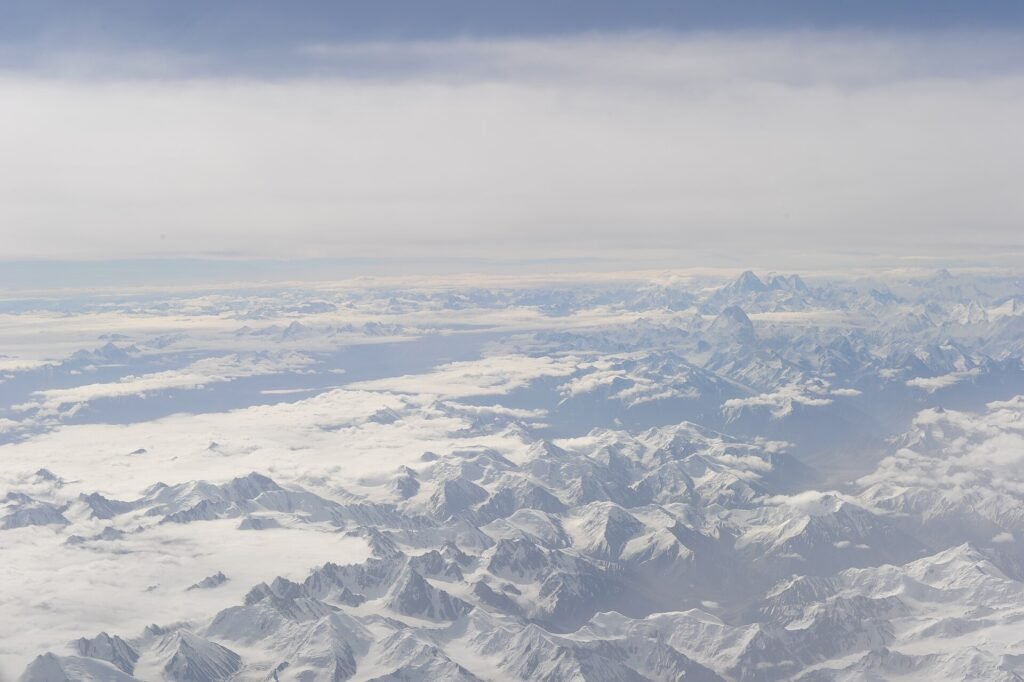
She climbed Everest without supplemental oxygen. But the summit was never the point
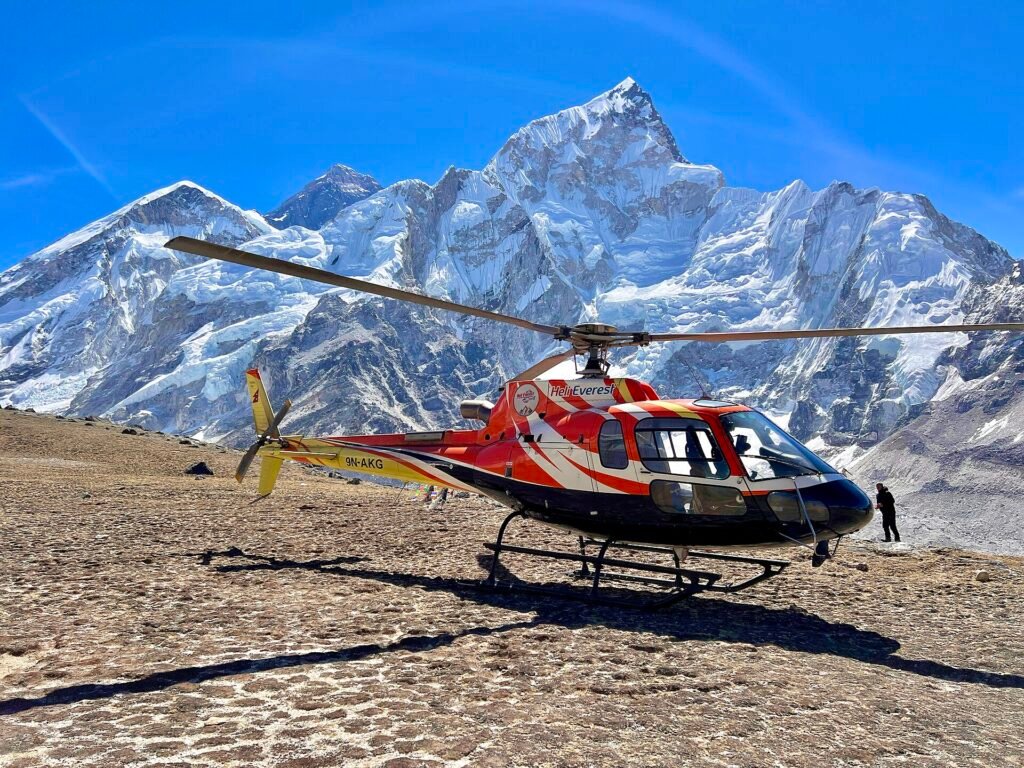
Two mountaineering stories drew attention this week, one marking the death of a Slovenian alpinist remembered for sacrificing his own summit bid to save fellow climbers, the other covering the Kathmandu launch of a memoir by an American guide who has stood atop Everest six times. Rock and Ice reported on the life of Vanja Matijevec, while the Kathmandu Post covered Melissa Arnot Reid’s book event at Le Sherpa Restaurant. The two accounts, drawn from separate outlets and separate continents, nonetheless sit together as reflections on what mountaineering asks of those who practise it.
What happened
Rock and Ice reported that Vanja Matijevec, a Slovenian alpinist born in Ljubljana on 14 October 1946, died, prompting recollections of his 1979 Everest expedition, during which he gave up his own planned summit attempt to help Stipe Božić, Stane Belak, and Ang Phu after the trio became stranded above 8,000 metres (roughly 26,247 feet) during their descent Rock and Ice. Božić later said that Matijevec’s selflessness helped him survive after he lost a crampon high on the mountain. Separately, the Kathmandu Post reported that Melissa Arnot Reid held the Nepal launch of her memoir, “Enough: Climbing Toward a True Self on Mount Everest,” on a Monday at Le Sherpa Restaurant in Maharajgunj, Kathmandu, an event hosted by the Pasang Lhamu Foundation The Kathmandu Post.
The people involved
Matijevec’s path into alpinism began, according to Rock and Ice, with childhood work tending cattle on pastures above Tržič, and he came to climbing later after meeting Jože Hočevar through his field work, beginning training as a mountain guide in 1975 Rock and Ice. In 1979 he joined Lado Vidmar and Blaž Oblak for the first ascent of Lucifer (WI4+), a roughly 200-metre (about 656-foot) frozen waterfall in Gozd Martuljek, climbed with equipment Matijevec later remembered as rudimentary, a climb Rock and Ice credited with helping usher in the era of modern ice climbing in Slovenia. In 1981 he and Franček Knez climbed to the rim of Lhotse’s South Face, then considered one of the great unsolved problems of Himalayan alpinism. Over his life he accumulated more than 30 first ascents, including a direct new route up the West Face of Trisul in 1987. Fellow Slovenian alpinist Viki Grošelj, who had known Matijevec since their early climbing days, remembered him as a distinctive personality and, as told to the Slovenian newspaper Delo, called him “the right man in the right place”.
Reid’s biography, as laid out by the Kathmandu Post, traces a different arc. Raised in Montana and Colorado, she began guiding at 19 on Washington’s Mount Rainier and first came to Nepal in 2008 as a 23-year-old assistant guide on an Everest expedition, after three years of guiding experience, saying she arrived with “an incredible level of naivety” and viewed summiting Everest as “the master’s degree for a guide” The Kathmandu Post. She summited on her first attempt. The article states that she returned to Nepal every year for the subsequent 18 springs, though elsewhere in the same account it also states she returned every spring for nine consecutive years — a discrepancy the Kathmandu Post’s reporting does not resolve. She has since stood atop Everest six times, and in May 2016 became the first American woman to summit and descend without supplemental oxygen, only the seventh woman ever to do so. In 2014 she made the first ascent of Mustang Himal in Nepal, and in 2012 she co-founded the Juniper Fund, which supports the families of mountain workers killed on the job.
The response
Grošelj’s tribute to Matijevec, carried by Rock and Ice via Delo, framed his death as the loss of a figure whose instinct for selflessness defined his reputation among Slovenian climbers Rock and Ice. At the Kathmandu event, Reid said the record she once chased was never the real story and warned that “Anyone expecting an adventure book will probably be disappointed,” describing the memoir instead as being about “the journey of being deeply human, which means being deeply flawed” The Kathmandu Post. Lakhpa Futi Sherpa, team leader on Pasang Lhamu’s 1993 expedition and Reid’s cousin, spoke at the launch and compared a summit to a goal scored in football — one person may score, but success belongs to everyone who played. Reid herself called Everest “a fancy billboard” she uses to direct attention towards funding for the families supported by the Juniper Fund, which the Kathmandu Post reported now supports 88 families, about 300 people.
Background and context
The Pasang Lhamu Foundation, which hosted Reid’s launch, is named after the first Nepali woman to climb Everest, who died during descent in 1993 The Kathmandu Post. Reid’s memoir opens on the South Col, placing her fighting for breath inside a fragile yellow nylon tent on exposed rock about five miles (roughly 8,000 metres, or 26,000 feet) above sea level, before reaching back to her childhood in southern Colorado and what the Post described as a volatile home life. She said she wrote her first draft believing it would remain in a locked drawer, changing its password every week, and that writing honestly let her step outside her shame and develop compassion for her younger self. In the book she names Francys Distefano-Arsentiev as the American who reached the summit without supplemental oxygen in 1998 but died during descent, saying of her own 2016 feat, “It is not me who was first”. She also discusses Chhewang Nima Sherpa, whom she met in 2008 when he already had 19 Everest summits, and who was swept away by an avalanche on Baruntse mountain in the Khumbu region in autumn 2010, leaving sons aged 11 and 13. Reid said a conversation with his widow the day after his death, in which she concluded that the wife needed the choices she had lost rather than money, became the basis for the Juniper Fund.
What is not yet confirmed
Rock and Ice’s account does not state when or how Matijevec died, nor does it give further detail on the circumstances surrounding his death beyond the retrospective tributes Rock and Ice. The Kathmandu Post’s reporting contains an unresolved inconsistency between the claim that Reid returned to Nepal every spring for 18 subsequent years and the separate claim that she returned every spring for nine consecutive years, and it is not clear which figure, if either, is accurate The Kathmandu Post. Neither account specifies what concrete steps, if any, are being taken to implement Reid’s suggestion of a short briefing for climbers on fixed lines, waste management, incident expectations, and rescue procedures.
Sources referenced
- Vanja Matijevec Gave Up His Own Everest Summit to Save Three People — Rock and Ice
- She climbed Everest without supplemental oxygen. But the summit was never the point — The Kathmandu Post
Written by Andoram by combining 2 independently published reports, each linked above. We synthesise facts and reproduce no source text.
Coverage timeline
- Vanja Matijevec Gave Up His Own Everest Summit to Save Three People — Rock and Ice, 28 Oct 2026, 00:58 UTC
- She climbed Everest without oxygen. But the summit was never the point — Inquirer.net, 27 Oct 2026, 05:48 UTC
- She climbed Everest without supplemental oxygen. But the summit was never the point — The Kathmandu Post, 27 Oct 2026, 02:01 UTC
This page is an automatically compiled index of third-party reporting. Headlines and links belong to their publishers; Andoram reproduces no article text. Last compiled 29 Oct 2026 00:45 UTC.