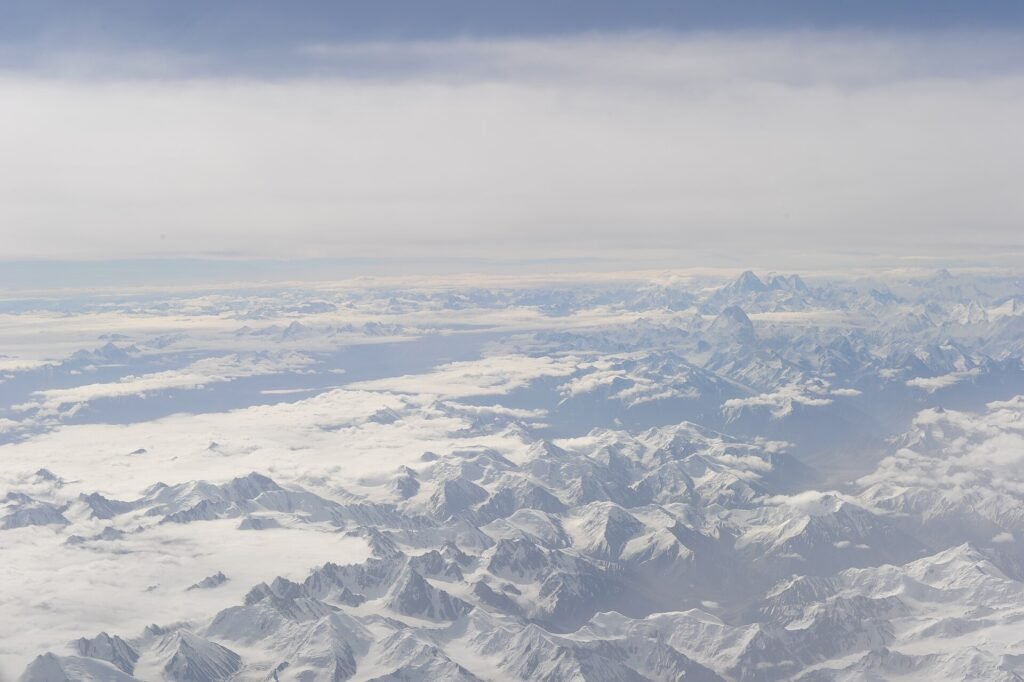
Ghandruk draws tourists with Himalayan views and Gurung hospitality
Nepal’s mountain regions carried three distinct stories this month: rising visitor numbers to the Annapurna-area village of Ghandruk during the Dashain festival, a French military team’s completion of a new route on Peak 41, and the recovery of the bodies of two Japanese climbers who had gone missing on the unclimbed Gangapurna West. Online Khabar, Rock and Ice, ExplorersWeb, Gripped and Arab News Pakistan each covered one strand of this period, and together their reporting illustrates both the appeal and the risks of Nepal’s high country this season.
What happened
In Kaski district, Online Khabar reported that Ghandruk village, in Annapurna Rural Municipality, has been drawing increasing numbers of domestic and international visitors, with numbers rising further at the start of the Dashain festival Online Khabar. Separately, Rock and Ice reported that on Wednesday, October 14, three members of France’s Groupe Militaire de Haute Montagne reached the 6,654-metre (21,831ft) summit of Peak 41 via a newly opened 1,400-metre line on the North Face, a route combining vertical ice, rock roofs and deep snow and later named “Bon Matin,” graded ED+ WI5+ M6 A1 90° snow Rock and Ice. At the same time, ExplorersWeb, Gripped and Arab News Pakistan reported that Japanese climbers Hidesuke Taneishi and Tetsu Hashimoto had gone missing while attempting the unclimbed Gangapurna West (7,140m) in the Annapurna region, having begun their attempt in September and lost contact on October 15 ExplorersWeb Gripped Arab News Pakistan. Gripped later reported, citing The Tourism Times, that on October 23 both bodies were located at around 6,300 metres (20,669ft) on the mountain’s south side.
The people involved
In Ghandruk, Online Khabar quoted local residents Alisa Gurung, who runs a homestay, and Amrit Gurung, who encouraged visitors to come for the area’s Gurung art and culture Online Khabar. Alisa Gurung said the mountains are clearly visible from the village and that it sits close to Pokhara, and that homestays there remain open even on the day of tika during Dashain. On Peak 41, the summit team comprised Sergeant Konrad Piontek and Corporals Amaury Fouillade and Clovis Paulin, three of a six-person GMHM contingent that arrived in Nepal in mid-September with a military doctor Rock and Ice. Corporal Paulin said the team had not expected pitches as steep as those encountered, particularly in snow, while Corporal Fouillade described reaching the summit as a physical relief, with any mental release coming later. On Gangapurna West, Mukti Ram Khanal, chief district officer of Manang district, confirmed the climbers had been missing since October 15, according to Arab News Pakistan Arab News Pakistan. A Russian team of Valerii Shamalo, Natalia Janina, Maksim Trufanov and Ruslan Kirichenko had reached the mountain earlier in October but reported finding no sign of the Japanese pair, and was itself forced down from around 6,800 metres (22,310ft) by bad weather ExplorersWeb Gripped.
The response
In Ghandruk, Alisa Gurung said weather had cleared and road conditions were currently good, and that local residents work together to repair roads when vehicles or conditions cause problems Online Khabar. Online Khabar reported that tourists can reach the village by hiring a jeep from Pokhara, roughly two and a half to three hours away by road, or by using their own vehicles, and that it functions as a transit point for trekkers heading to Ghorepani, Poon Hill, Annapurna and Mardi Himal Gripped. On Peak 41, the GMHM team began climbing on October 11 and summited after four days, according to a GMHM statement, before descending via the peak’s southeastern aspect using 15 rappels and considerable downclimbing to complete a loop back to basecamp Rock and Ice. For Gangapurna West, Mukti Prasad Khanal confirmed a helicopter search-and-rescue operation was underway, and ExplorersWeb reported that high-altitude helicopters and drones recovered some gear, including trekking poles, near 7,050 metres (23,130ft) ExplorersWeb. Gripped reported that a pack and trekking pole believed to belong to the missing climbers were found during the search, while Arab News Pakistan reported that helicopter rescuers found no sign of the pair apart from what appeared to be their bag near the summit. Arab News Pakistan also reported that officials were discussing whether to conduct a further rescue operation the following Friday, before the bodies were later located Arab News Pakistan.
Background and context
GMHM, a unit of France’s 27th Mountain Infantry Brigade with ten members and no fixed contract length, has as its official task the mastery of extreme terrestrial and high-altitude environments to help develop the French army’s mountain capabilities, according to a GMHM spokesperson, who said the group’s purpose is to practise high-level alpinism and pass on mountaineering and cold-weather knowledge, with no further militaristic aim Rock and Ice. Beyond its annual high-altitude expedition, the unit trains the Groupement de Commandos de Montagne in cold-weather survival in Greenland and develops rock and ice climbing skills in the French Alps and abroad, including Yosemite. Gangapurna West was opened to mountaineering in 2014 and had drawn earlier attempts, including one in 2016 by Choi Seok-mun, Kim Chang-ho and Park Joung-yong, and another in 2017 by Simon Messner and Phillip Pruenster Gripped. The neighbouring peak Gangapurna, at 7,455 metres (24,459ft), was first climbed in 1965 by Erich Reismueller, Ang Temba Sherpa and Phu Dorjee Sherpa, with a second ascent in 1971 during which avalanches killed eight members of a Japanese team over two days, a disaster Gripped describes as the deadliest climbing event in the Annapurna Himal to date. A third ascent followed in 1974 without major incident, and in 1981 Canadian alpinists James Blench and John Lauchlan made the first ascent of the south face, a climb regarded as among the hardest first ascents by Canadians in the Himalaya.
What is not yet confirmed
Accounts differ slightly on the precise altitude at which contact with the Japanese climbers was lost, with figures of around 7,050 metres and 7,100 metres reported by different outlets, and it remains unclear which is more accurate Gripped Arab News Pakistan. The exact circumstances of how the climbers died, and whether the storm reported roughly three weeks before the October 19 coverage was the direct cause, have not been detailed in the available reporting ExplorersWeb. It is also not confirmed whether any further search or recovery operation took place beyond the October 23 location of the bodies, nor whether Ghandruk’s rising visitor figures reflect a sustained trend beyond the Dashain period Online Khabar.
Sources referenced
- Ghandruk draws tourists with Himalayan views and Gurung hospitality — Online Khabar
- Three Climbers Establish Giant Himalayan Route in Enviable On-the-Clock “Training” — Rock and Ice
- Two Climbers Missing on Gangapurna West — ExplorersWeb
- Two Climbers Missing on Remote Mountain in Nepal — Gripped
- Two Japanese climbers missing on a Himalayan peak in Nepal — Arab News Pakistan
Written by Andoram by combining 5 independently published reports, each linked above. We synthesise facts and reproduce no source text.
Coverage timeline
- Two Japanese climbers missing on a Himalayan peak in Nepal — Arab News Pakistan, 22 Oct 2026, 12:35 UTC
- Two Climbers Missing on Remote Mountain in Nepal — Gripped, 22 Oct 2026, 12:29 UTC
- Two Climbers Missing on Gangapurna West — ExplorersWeb, 22 Oct 2026, 09:38 UTC
- Three Climbers Establish Giant Himalayan Route in Enviable On-the-Clock “Training” — Rock and Ice, 20 Oct 2026, 16:14 UTC
- Ghandruk draws tourists with Himalayan views and Gurung hospitality — Online Khabar, 20 Oct 2026, 05:15 UTC
This page is an automatically compiled index of third-party reporting. Headlines and links belong to their publishers; Andoram reproduces no article text. Last compiled 23 Oct 2026 12:15 UTC.