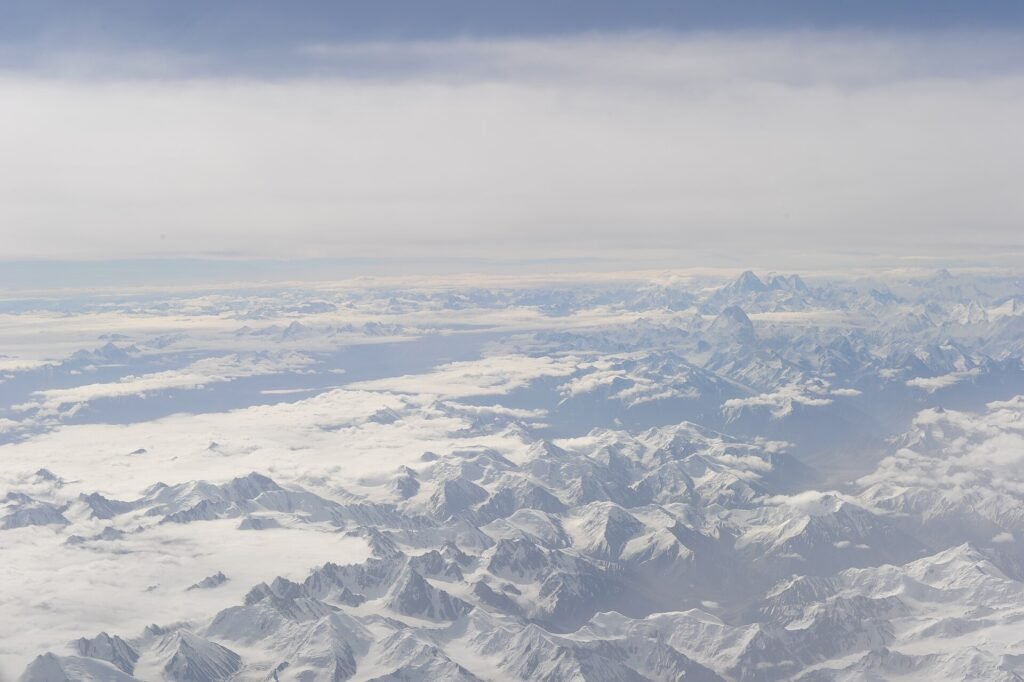
Manaslu Avalanche Delays Summits as Concerns Grow Over Crowding
Two climbers died on Manaslu after an avalanche struck Camp III on the night of 20 September, as weeks of heavy snowfall and repeated slides forced expeditions off Nepal’s 8,163-metre (26,781-foot) peak. Outfitters including Seven Summit Treks and 8K Expeditions subsequently suspended or cancelled their climbs, while officials in Gorkha reported climbers streaming down from the mountain mid-expedition Online Khabar Outside.
What happened
Manaslu, described by ExplorersWeb as Nepal’s most popular peak during the autumn climbing season, saw conditions deteriorate through September after more than a week of precipitation ExplorersWeb. An avalanche buried a section of the climbing route and recently fixed rope below Camp 4, on the shoulder of the summit ridge, just hours before the rope-fixing team planned to cross it; climber Dandu Sherpa filmed the slide at around 1:30 pm local time, and no one was hurt. The rope-fixing team, assigned by the Expedition Operators’ Association of Nepal, reached the true summit on Thursday 17 September, opening the route for summit attempts; according to Everest Chronicle this was three days earlier than the equivalent date in 2025 Gripped Outside. That push had itself been delayed by an avalanche above Camp III three days earlier, which swept away sections of fixed rope.
Persistent snowfall beginning the Friday after rope-fixing forced climbers at Camp 2 and Camp 3 back down to Base Camp, with EOA officials saying the route and Base Camp were fully covered in snow Gripped. Then, on the night of 20 September, an avalanche struck Camp III at roughly 22,000 feet (approximately 6,700 metres), killing two climbers inside their tent Outside. Rescue crews recovered the bodies the following day, buried under several feet of snow according to Outside, with Makalu Adventure’s managing director Mohan Lamsal telling the Times of India the pair had been found under nearly seven feet of snow. By 22 September, ExplorersWeb published a report headlined “Game Over on Manaslu” as climbers and whole expeditions descended ahead of forecasts for further heavy snow.
The people involved
The climbers killed at Camp III were identified as German-Indian climber Dhrubajyoti Guha and guide Phursemba Sherpa, both aged 47; Lamsal said six other climbers who had retreated from Camp II were safe, while Guha and Sherpa had made an early summit attempt and continued on to Camp III Outside. Their deaths followed two earlier fatalities reported by ExplorersWeb: a 50-year-old Singaporean climber, Lau Wee Seng, who died near 6,000 metres while acclimatising, and 20-year-old porter Tashi Sherpa, found dead in a tent at Base Camp the previous week ExplorersWeb. Outside reported that Lau died on 17 September during his acclimatisation ascent, while outfitter 8K Expeditions told The Tourism Times he had felt unwell descending from Camp 2 and died while resting. Together, these incidents brought the season’s Manaslu death toll to four.
Other figures tracked the unfolding situation from the mountain. Mingma Gyalje Sherpa posted video on 16 September of an avalanche on Manaslu’s flanks that narrowly missed tents at Camp III, writing on Instagram that avalanches were the one hazard that always frightened him despite his experience, and that the day had been fortunate because no one was above the camp Outside. Gelje Sherpa, speaking from Base Camp, urged caution and noted that some tents had collapsed under snow, while mountain guide Abiral Rai described the weather as unfavourable and of uncertain duration Gripped. Halung Dorchi Sherpa of Summit Force raised separate concerns about crowding on the fixed ropes, warning that the narrow true summit faced considerable pressure from climber numbers and suggesting authorities could require climbers to stop at the less steep false summit ExplorersWeb.
The response
Several outfitters pulled back as the weather system developed. Veteran climber and helicopter rescue pilot Simone Moro abandoned his ascent after reaching Camp III on 22 September, descending after receiving a forecast of heavy snow from 24 to 28 September and estimating at least two metres of fresh snow across Nepal’s big mountains Outside. Mingma G announced his team was vacating Base Camp on 23 September owing to avalanche risk, 8K Expeditions said it was pausing its expedition, and Seven Summit Treks announced it was calling off its climb altogether. Makalu Adventure cancelled its expedition following the deaths at Camp III, with surviving team members flown to lower elevations the next day.
In Gorkha, Karma Chhewang Lama, ward chair of Chumnubri Rural Municipality-1, Samagaun, said climbers had waited nearly two weeks without improvement before beginning to leave, with continuous rainfall producing around five feet of snow in surrounding areas, and added that the government had urged alertness from 24 to 28 September Online Khabar. Local businessperson Prabal Lama said rainfall of this duration was unusual for the region, describing it as the most sustained he had seen in twelve years, and put snow depth at up to three feet at Base Camp and seven to eight feet at Camps I, II and III. Hotel operator Mingmar Chhiring Lama in Samagaun estimated that only around ten percent of climbers had left the area so far, with many still waiting.
Background and context
Manaslu is the world’s eighth-highest peak and, according to Outside, Nepal’s second most popular 8,000-metre peak after Everest; American guiding company Summit Climb describes it on its website as the most accessible 8,000-metre peak in the country Outside. ExplorersWeb reported that 480 foreign climbers had registered for the season, with over 500 local guides and support staff also on the mountain, while Online Khabar put total permits at around 500 and the Himalayan Times figure, cited by Outside, at 493 ExplorersWeb Online Khabar. The previous season had drawn 366 male and 127 female climbers from 67 countries across 41 teams, generating Rs 224.814 million in government revenue. Nepal also issued 494 Everest permits for spring, described by Outside as the biggest year on record for that peak.
Avalanche risk on Manaslu has precedent: Outside noted a 2012 avalanche that destroyed Camp III and killed 11 climbers, and the 2022 death of American extreme skier Hilaree Nelson, swept from a 5,000-foot slope Outside. Mountaineering writer Mike Marlot was quoted by Outside recalling that, after climbing roughly 40 major peaks, Manaslu was the one he could not recommend, calling it “avalanche central”. Climber Pastenji Sherpa had posted video on 1 September of an avalanche engulfing Camp I at 18,700 feet, describing the mountain as having “showed its true power”. Mingma G also referenced Nepal’s recent flooding following climber deaths on Broad Peak, urging those attempting Manaslu, Dhaulagiri and other peaks to check forecasts closely Gripped.
What is not yet confirmed
It remains unclear how the developing weather system over the Bay of Bengal will ultimately affect Manaslu; alpine meteorologist Krishna Bahadur Manandhar told Everest Chronicle that its track could still shift, that assessing its development would take five to six days, and that even if it reached Bihar it might not reach the mountain Gripped. Whether any climbers will return for further summit attempts this season is also uncertain, with Karma Chhewang Lama suggesting it is unlikely even if conditions improve Online Khabar. The exact proportion of climbers who have now left the region, beyond Mingmar Chhiring Lama’s rough estimate, has not been established, nor has a final count of expeditions that have cancelled outright versus those merely pausing Outside. It is also not confirmed whether the rope-fixing team’s replacement of 1,300 metres of rope near Camp 4 was completed as planned, nor whether further casualties occurred after the Camp III avalanche of 20 September ExplorersWeb.
Sources referenced
- Manaslu Avalanche Delays Summits as Concerns Grow Over Crowding — ExplorersWeb
- Heavy Snow on Manaslu Hampers Summit Pushes — Gripped
- Climbers begin returning from Manaslu due to heavy snowfall — Online Khabar
- Deadly Avalanches and Heavy Snowfall Just Torpedoed the Climbing Season on Manaslu — Outside
Written by Andoram by combining 4 independently published reports, each linked above. We synthesise facts and reproduce no source text.
Coverage timeline
- “I’ve Never Feared Anything—but Avalanches.” Deadly Snowfall Has Climbers Fleeing Manaslu. — Outside Magazine, 23 Sep 2026, 21:45 UTC
- Deadly Avalanches and Heavy Snowfall Just Torpedoed the Climbing Season on Manaslu — Outside, 23 Sep 2026, 21:39 UTC
- Manaslu season ends without a summit as bad weather forces climbers to turn back — Online Khabar, 23 Sep 2026, 12:36 UTC
- Bodies of 2 climbers brought to Kathmandu — Online Khabar, 23 Sep 2026, 11:50 UTC
- Climbers begin returning from Manaslu due to heavy snowfall — Online Khabar, 22 Sep 2026, 09:22 UTC
- High Risk on Manaslu: Two Die in Avalanche; Summit Push Continues — ExplorersWeb, 21 Sep 2026, 18:13 UTC
- Avalanches, Death and Decision Time in Himalaya — Gripped, 21 Sep 2026, 15:58 UTC
- Two climbers killed by avalanche at Camp III on Manaslu — Everest Chronicle, 20 Sep 2026, 10:34 UTC
- Heavy Snow on Manaslu Hampers Summit Pushes — Gripped, 19 Sep 2026, 13:08 UTC
- Approaching Cyclone Triggers Rush to Summit on Manaslu — ExplorersWeb, 18 Sep 2026, 15:49 UTC
- Manaslu Avalanche Delays Summits as Concerns Grow Over Crowding — ExplorersWeb, 17 Sep 2026, 12:28 UTC
This page is an automatically compiled index of third-party reporting. Headlines and links belong to their publishers; Andoram reproduces no article text. Last compiled 24 Sep 2026 21:45 UTC.