Mingma David Sherpa returning to Nepal with Yukta Gurung’s body after Broad Peak tragedy
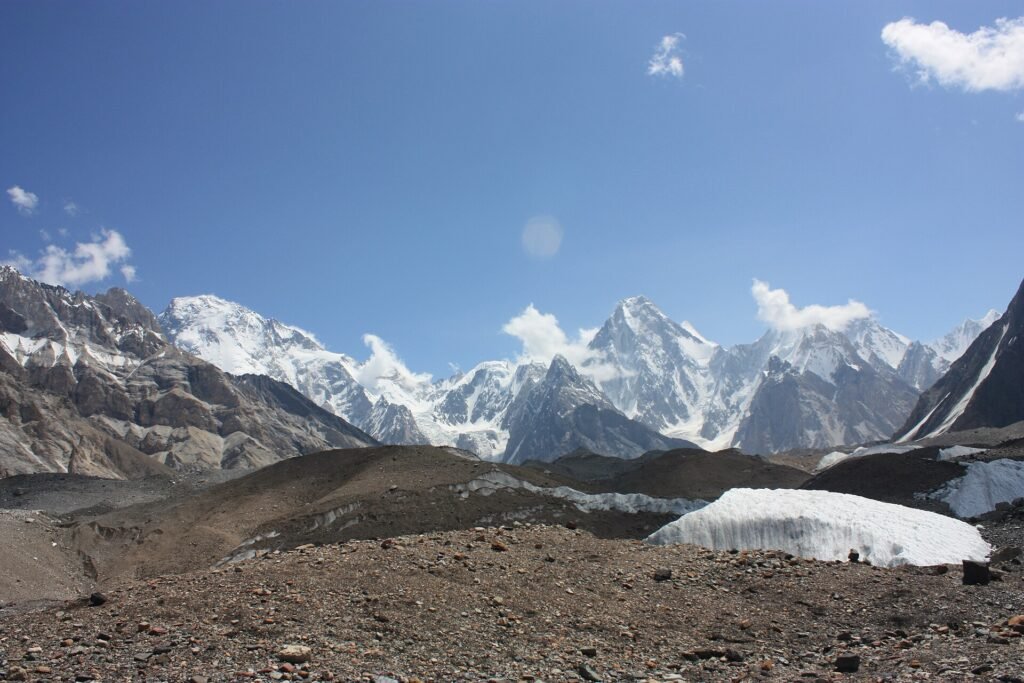
An avalanche struck Broad Peak, in Pakistan’s Karakoram range, on July 30 at an altitude of roughly 6,600 metres (21,654 feet), between Camp 2 and Camp 3 on the mountain’s normal route Desnivel ExplorersWeb. The slide swept away a group of ten climbers, among them Nepali mountaineer Nirmal Purja, founder of the guiding agency Elite Exped, whose death the agency later confirmed Gripped. In the days that followed, rescue teams worked in difficult terrain to reach the climbers, though accounts differ on how many bodies had been located and how many remained missing at the time each outlet reported.
What happened
According to Desnivel, the avalanche hit the normal route of Broad Peak, which the outlet describes as the twelfth-highest mountain in the world, at approximately 6,600 metres (21,654 feet) Desnivel. ExplorersWeb corroborated the location and altitude of the slide, reporting that it struck between Camp 2 and Camp 3 ExplorersWeb. Both outlets agree that ten climbers were caught in the avalanche while ascending. Search efforts were disrupted on Friday night by bad weather, and resumed the following day, continuing into Saturday afternoon, according to Desnivel.
The people involved
Elite Exped confirmed that Nirmal Purja’s body had been found, along with the bodies of the other nine climbers swept away, according to Desnivel, which reported that no survivors were located and that all ten bodies were ultimately recovered or confirmed dead Desnivel[S6=S1]. ExplorersWeb, however, reported that as of its account, search teams had reached eight of the ten climbers, with two still unlocated ExplorersWeb. Gripped, citing the Alpine Club of Pakistan, reported that seven bodies had been recovered from the mountain, with three climbers still listed as missing Gripped. These figures diverge, and it is not clear from the supplied reporting whether the discrepancy reflects different points in an evolving search or differing counts by each outlet.
The first two bodies recovered, found in the lower part of the mountain, were identified as Nadhira Al Harthy, of Oman, and Pur Bahadur “Yurta” Gurung, a Nepali sherpa, according to Desnivel Desnivel. ExplorersWeb reported that an eight-member ground team located Nirmal Purja’s body at 5,700 metres (18,701 feet) and brought it back to Camp 1, and that the same team also found the remains of Wang Zhong, Nima Sherpa, and Kili Pemba “Kilu” Sherpa, with Kilu’s body successfully brought down the mountain ExplorersWeb. Other bodies reportedly remained at around 5,000 metres (16,404 feet) on difficult ground, and the plan, per ExplorersWeb, was to move them down to what is known as the “Japanese Camp,” a flatter area below Camp 1 not currently used by standard expeditions. The Alpine Club of Pakistan told ExplorersWeb that one further body had been located at a significantly higher elevation, and that recovery there was considered unlikely given extremely hazardous terrain and conditions.
Those killed included six Nepali sherpas and climbers, along with individuals of four other nationalities: Pakistani, American, Omani, and Chinese, according to Desnivel Desnivel. Nadhira Al Harthy, 47, had become the first Omani woman and the second Omani citizen to summit Everest in 2019 and K2 in 2022, and the first Omani to summit Nanga Parbat in 2024, having also climbed Manaslu and Ama Dablam Gripped. Pur Bahadur “Yurta” Gurung, raised in Gorkha, began work as a porter in 2009 before progressing to assistant guide, trekking guide, and altitude guide; he had summited Everest roughly ten times and completed 28 ascents of peaks above 8,000 metres. Kili Pemba “Kilu” Sherpa, 46, from the Rolwaling valley, had taken part in the winter ascent of K2 in 2021, summited Everest fifteen times and K2 twice, and completed all fourteen 8,000-metre peaks with supplemental oxygen while working mainly as an altitude guide. Nima Sherpa, 36, from Makalu Rural Municipality, worked as an altitude guide, and Nawang Thindu Sherpa was described as a recognised Nepali altitude guide. Sohail Sakhi, from Hunza in Gilgit-Baltistan, had climbed K2, Nanga Parbat, and both Gasherbrum peaks along with Kangchenjunga, several without supplemental oxygen, and worked as a geographer, photographer, and promoter of alpinism in his region; he was guiding American client Mallory Geis, 39, who had recently left her job to pursue mountaineering and was attempting her first 8,000-metre peak. Wang Zhong, a Chinese climber pursuing all fourteen 8,000ers, had begun with Cho Oyu and had already climbed Everest and Nanga Parbat among others; Broad Peak would have been his tenth such summit.
ExplorersWeb reported that on Saturday, rescuers reached some bodies for the first time and carried a Nepali climber down to Base Camp who was, after contradictory reports, identified as Gyalu Sherpa, a guide with Seven Summit Treks who had summited Manaslu in winter and climbed Kangchenjunga three times in a single season ExplorersWeb. As of ExplorersWeb’s report, there was no confirmation of the location of Nawang Thindu Sherpa or Sohail Sakhi. Sohail Sakhi’s family, assuming his body would not be found, decided to perform final funeral rituals and asked relatives and friends to join them in prayer, according to ExplorersWeb.
The response
ExplorersWeb reported that the avalanche had swept some bodies well off the normal route, forcing the ground team to take on significant risk to reach them ExplorersWeb. Rescuers requested a long-line helicopter retrieval operation from the Pakistan Army, according to ExplorersWeb, which noted that such operations are common in Nepal but that Pakistani military pilots are usually not permitted to carry out civilian missions of this kind because of safety concerns. The Alpine Club of Pakistan confirmed the helicopter request and said it was assessing whether the operation posed too much risk to pilots.
Gripped reported that the Alpine Club of Pakistan described the recovery mission as “exceptionally challenging and technically demanding,” carried out in some of the world’s most dangerous mountain conditions Gripped. ACP president Irfan Arshad Khan confirmed that recovered climbers had been transported to Broad Peak base camp. The operation was led by Nepali mountaineer Mingma Gyalje Sherpa, known as “Mingma G,” according to Gripped, which reported that the ACP recognised the efforts of Pakistani climbers Sirbaz Khan, Abid Baig and Sherbaz, along with Nepali climbers Dipen Gurung and Pemba Chhewang Sherpa. The ACP also thanked the Pakistan Army, the governments of Pakistan and Gilgit-Baltistan, local authorities, supporting agencies, the British High Commission, and the Embassy of Nepal for their assistance, and said it remained committed to supporting further recovery efforts when conditions allowed, so that missing climbers could be returned to their families.
Background and context
ExplorersWeb placed the Broad Peak avalanche within a broader pattern of losses in the Karakoram, noting that Sergei Nilov of Russia had died in an avalanche on Gasherbrum IV while attempting to retrieve the remains of his climbing partner, Dmitry Golovchenko, who had died there the previous year; Golovchenko’s body was never found, and Nilov left behind a wife and six children ExplorersWeb. Broad Peak itself rises to 8,051 metres (26,414 feet) in the Karakoram range of Pakistan, though Desnivel gives its height as 8,047 metres (approximately 26,405 feet) Desnivel.
What is not yet confirmed
The total number of bodies recovered and the number still missing remain unsettled across the supplied reporting, with Desnivel stating that all ten were recovered and no survivors found Desnivel, ExplorersWeb reporting eight of ten reached with two unlocated ExplorersWeb, and Gripped reporting seven recovered with three missing Gripped. The precise locations of Nawang Thindu Sherpa and Sohail Sakhi had not been confirmed as of ExplorersWeb’s report. Whether the Pakistan Army approved the requested long-line helicopter retrieval, and whether it was ultimately deemed too hazardous for pilots, was not confirmed in the supplied material. It also remains unclear whether the body located at a significantly higher elevation, which the Alpine Club of Pakistan considered unlikely to be recoverable, will be retrieved.
Sources referenced
- Las diez víctimas mortales de la avalancha del Broad Peak — Desnivel
- Purja's Body Found; Safety Concerns for Broad Peak Searchers — ExplorersWeb
- Body of Famed Mountaineer Recovered from Broad Peak — Gripped
Written by Andoram by combining 3 independently published reports, each linked above. We synthesise facts and reproduce no source text.
Coverage timeline
- Funeral held with honours in Kathmandu for climber Pur Bahadur Gurung killed in Broad Peak avalanche — The Tribune, 7 Aug 2026, 13:48 UTC
- Nepal honours Broad Peak avalanche victim Pur Bahadur Gurung — Everest Chronicle, 6 Aug 2026, 18:50 UTC
- Body of Purba Bahadur Gurung, who died in Broad Peak avalanche, brought to Nepal — Ratopati, 6 Aug 2026, 14:57 UTC
- Body of mountaineer Pur Bahadur Gurung ‘Yukta’ repatriated to Nepal after Broad Peak tragedy — Khabarhub, 6 Aug 2026, 13:08 UTC
- Mingma David Sherpa returning to Nepal with Yukta Gurung's body after Broad Peak tragedy — The Tourism Times, 6 Aug 2026, 06:12 UTC
This page is an automatically compiled index of third-party reporting. Headlines and links belong to their publishers; Andoram reproduces no article text. Last compiled 8 Aug 2026 17:19 UTC.