The terrifying final moments of mountaineer Nims Dai on Broad Peak: What is a slab avalanche and what hap
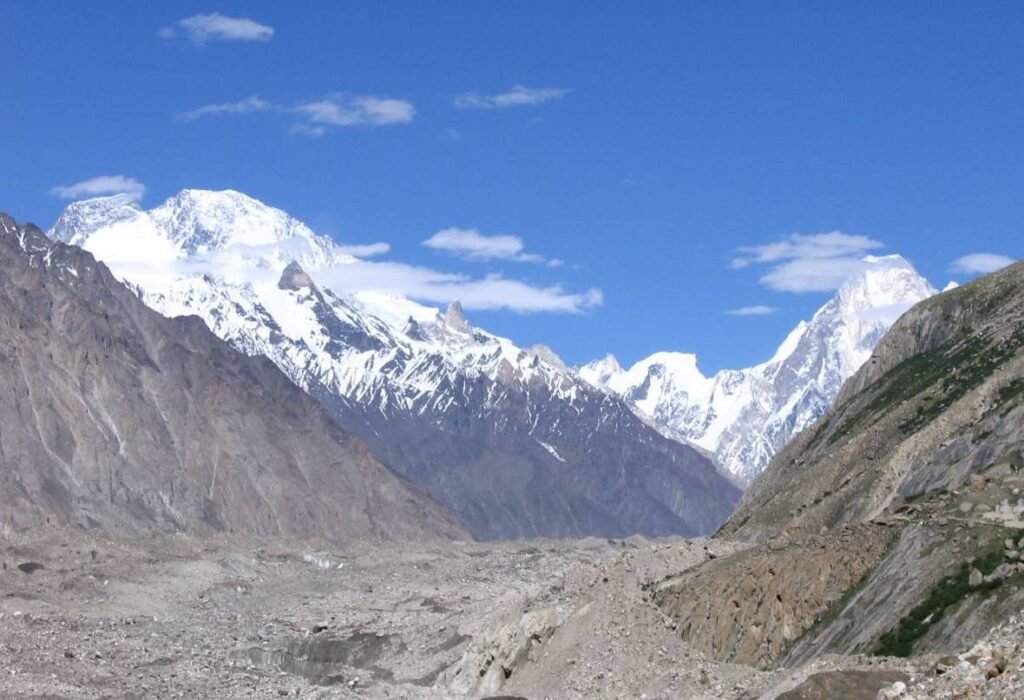
Search volunteers recovered the remains of American climber Mallory Geis on Broad Peak on 21 August, officials with the Alpine Club of Pakistan said, closing out a weeks-long search for the last unlocated victim of an avalanche that struck the 8,051m (26,414ft) Karakoram peak on 30 July Arab News Pakistan ExplorersWeb Outside. Her discovery brings the confirmed toll from that slide to ten climbers, though one body remains on the mountain.
What happened
The avalanche hit four separate climbing teams above Camp II, at roughly 21,160ft (6,450m), at around 9am local time on 30 July Outside. Ten climbers died in the slide ExplorersWeb, and a search for Geis began the following day, 31 July, after her team was swept away Arab News Pakistan. Pakistani authorities initially reported that Geis herself had been recovered on 31 July, but Outside reported that it later learned rescuers had in fact retrieved only a detached leg that day, with the remainder of her body unaccounted for for weeks afterward. By 21 August, eight other climbers’ remains had already been brought down from the mountain. Search teams also located the body of Nepali climber Nawang Thindu Sherpa on 31 July but left it in place, citing the danger of the surrounding terrain.
The people involved
Geis, 39, lived in San Antonio, Texas, and had announced on social media earlier in the year that she was closing her Pilates studio to pursue mountaineering full-time, a move also reported by CNN Arab News Pakistan ExplorersWeb Outside. She wrote that she expected her new pursuit to involve “lots of helmets, harnesses, and crampons”. Broad Peak was her first attempt on an 8,000-metre peak in Pakistan, though she had previously summited Lobuche East at 6,119m (20,077ft) and Mera Peak at 6,476m (21,247ft) in Nepal and had completed ice-climbing training in the United States earlier in the year. Her family issued a statement in early August describing her as “a bright light who was loved deeply by her family and friends”, and her father, George Geis, told San Antonio broadcaster KENS 5 that the family’s focus was “to get her back”.
Accounts diverge on the fate of Nirmal Purja, the Nepal-born former British Army soldier known as “Nims Dai” who gained attention for climbing the world’s 14 highest peaks in 189 days in 2019, an achievement later featured in the Netflix documentary “14 Peaks: Nothing Is Impossible,” before his record was broken in 2023 Arab News Pakistan. Arab News described the Broad Peak expedition as having been led by Purja without stating that he died, whereas Outside reported that the avalanche killed ten climbers “including Nepali-British climber Nirmal ‘Nims’ Purja” Outside. The two accounts are not reconciled in the supplied reporting.
Separately, ExplorersWeb reported that UK-based Pakistani climber Asma Mushtaq died on 20 August while descending Spantik, at 7,027m (23,054ft), after reaching its summit ExplorersWeb. Her guiding agency, Karakoram Calling, said she suffered a severe high-altitude medical emergency at around 6,400m (21,000ft) and that guides were unable to save her. Mushtaq, an obstetrics and gynaecology specialist who documented her travels online, had previously completed a winter ascent of Musa ka Musallah at 4,076m (13,373ft) and taken part in trips to the Rupal and Arandu areas. A recovery team was deployed for her body, and her family had reached Skardu. This incident is distinct from the Broad Peak avalanche but was reported by ExplorersWeb in the same period.
The response
Local volunteer porters located Geis’s remains, and Major General Irfan Arshad Khan, president of the Alpine Club of Pakistan, confirmed the discovery Arab News Pakistan Outside. He told the Pakistani newspaper Dawn that volunteers were moving her body to a nearby base camp, from where it would be airlifted by helicopter to Skardu ExplorersWeb. Ayaz Shigri, the club’s general secretary, confirmed the identification of the remains. The Associated Press, as cited by Outside, reported that Geis was the last avalanche victim to be located. Earlier in the search, a candlelight vigil was held on 4 August in Kathmandu to commemorate climbers who died in the avalanche.
Background
Broad Peak sits in Pakistan’s Karakoram range and ranks as the 12th-highest mountain in the world Outside. Lukas Furtenbach, founder of Furtenbach Adventures, told Outside that Broad Peak is among the more frequently attempted 8,000-metre peaks, though it draws fewer climbers than Everest or Manaslu, with between 50 and 100 attempts annually placing it in the “upper middle” of such peaks by traffic. He said expeditions there typically run six to eight weeks, much of that time devoted to acclimatisation and waiting out weather windows. Arab News noted that accidents are common on expeditions in northern Pakistan generally, attributing this to avalanches, falling ice and rock, high altitude and rapidly shifting weather Arab News Pakistan. Outside described the 30 July avalanche as the deadliest high-altitude mountaineering accident since 2015, when an earthquake-triggered avalanche killed 22 people at Mount Everest Base Camp.
What is not yet confirmed
The supplied reporting leaves unresolved whether Nirmal Purja died in the avalanche, as Outside stated, or survived to lead the expedition, as Arab News’s account implies; no source directly addresses this discrepancy. It also remains unclear why Pakistani authorities initially reported recovering Geis on 31 July when, according to Outside, only a detached limb had been found at that point. There is no confirmation of when, or whether, Nawang Thindu Sherpa’s body will be retrieved from the mountain given the terrain hazards cited by search teams. Similarly unconfirmed is the current status of the recovery effort for Asma Mushtaq’s body on Spantik. Finally, none of the supplied accounts details the specific cause or triggering conditions of the 30 July avalanche itself.
Sources referenced
- Remains of last missing climber found after Pakistan’s Broad Peak avalanche — Arab News Pakistan
- Final Body Found on Broad Peak and Another Death in the Karakoram — ExplorersWeb
- Authorities Have Found the Body of Sarah Geis, the Last Climber Missing After Broad Peak’s Deadly Avalanche — Outside
Written by Andoram by combining 3 independently published reports, each linked above. We synthesise facts and reproduce no source text.
Coverage timeline
- Inquest opened into the death of famous mountaineer Nirmal Purja — Daily Echo, 25 Aug 2026, 06:59 UTC
- The terrifying final moments of mountaineer Nims Dai on Broad Peak: What is a slab avalanche and what hap — The Times of India, 24 Aug 2026, 06:30 UTC
- Renowned mountaineer Nirmal Purja passes away after Broad Peak avalanche: Nimsdai Foundation — Babushahi.com, 24 Aug 2026, 00:08 UTC
This page is an automatically compiled index of third-party reporting. Headlines and links belong to their publishers; Andoram reproduces no article text. Last compiled 26 Aug 2026 06:45 UTC.