Elite climber Nirmal ‘Nimsdai’ Purja killed in Broad Peak avalanche during Karakoram expedition
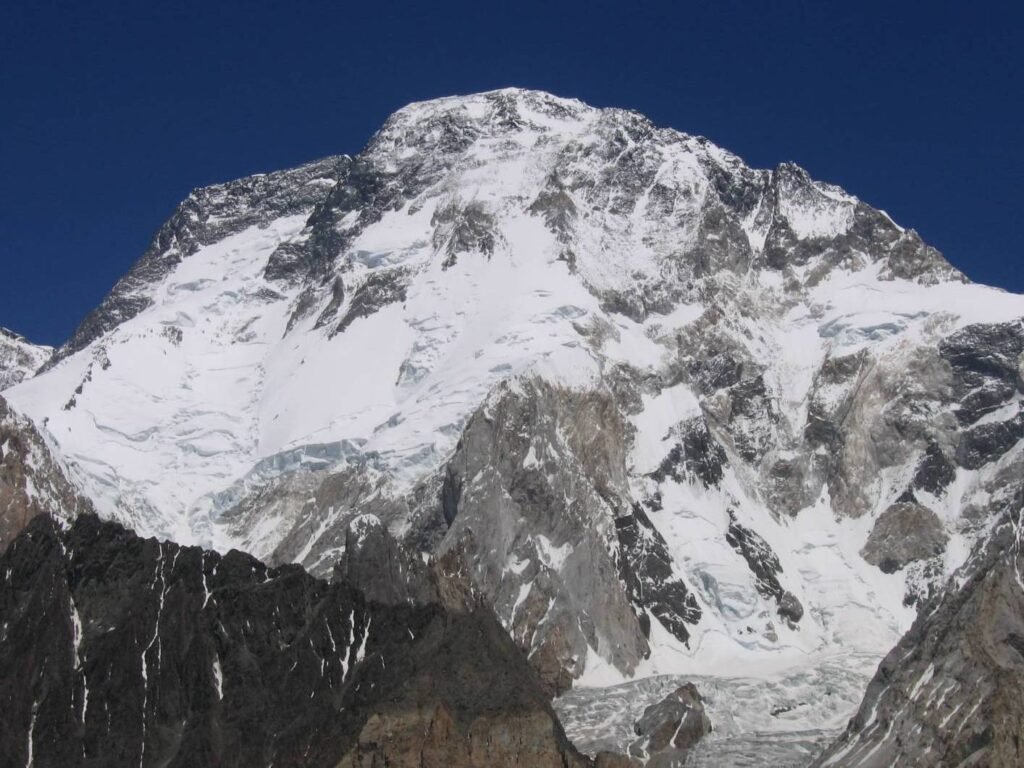
Broad Peak, which rises to 8,051 metres (26,414 feet) in the Karakoram range of Gilgit-Baltistan, Pakistan, was struck by an avalanche on July 30, 2026, that hit a group of ten climbers moving between Camp 2 and Camp 3. Several climbers have since been confirmed dead, including Nirmal “Nims” Purja, a widely known high-altitude mountaineer, while rescue teams continued searching for others as of August 1.
What happened
ExplorersWeb, Alpinist, Climbing and Desnivel all reported that an avalanche struck the group of ten climbers on Broad Peak’s normal, or West Ridge, route ExplorersWeb Alpinist Magazine Climbing Desnivel. The outlets differ on Broad Peak’s exact height, with Climbing citing 8,051m (26,414ft), close to the figure most commonly cited for the mountain, which is also known locally as Falchan Kangri, Balti for “broad peak”. The peak is generally regarded as less technically demanding than some of the other mountains above 8,000 metres.
Accounts of the timing vary. ExplorersWeb put the avalanche at around 9:20am, Climbing at about 9am with GPS data suggesting 8:57 to 9:30am, and Desnivel at 9:30am local time, while the Alpine Club of Pakistan’s own release and Alpinist both described the event as occurring closer to midday ExplorersWeb Alpinist Magazine Climbing Desnivel. ExplorersWeb additionally reported that some accounts suggested two separate avalanches may have occurred rather than a single slide. The avalanche site itself is given at roughly 6,660m by ExplorersWeb, 6,579m (21,580ft) by Climbing, and 6,600m by Desnivel.
GPS trackers carried by several of the climbers showed them stop ascending and then fall substantial distances. ExplorersWeb reported the trackers indicated climbers halted around 9:30am Pakistan time before dropping several hundred metres ExplorersWeb. Climbing reported that Mallory Geis’s tracker recorded a sudden descent of 543m (1,784ft), while Nadhira Al Harthy’s showed a fall of 1,651m (5,417ft) Climbing. Alpinist reported that trackers for several missing climbers became stationary above 7,800m following the avalanche Alpinist Magazine, and Desnivel reported that, according to Elite Exped, Purja’s track appeared to continue showing movement for some time afterward Desnivel.
The people involved
The ten climbers caught in the avalanche were Nirmal Purja, Pur Bahadur “Yukta” Gurung, Nima Sherpa, Gyalu Sherpa, Nawang Thendu Sherpa and Kili Pemba “Kilu” Sherpa, all Nepali; Sohail Sakhi, a Pakistani guide; Mallory Geis, an American client; Nadhira Al Harthy, an Omani climber; and Wang Zhong, a Chinese climber ExplorersWeb Climbing Desnivel. ExplorersWeb reported that four teams were on the mountain at the time: Sakhi guiding his client Geis, Purja leading the Elite Exped team, an Imagine Nepal team climbing without its leader Mingma G, who was on K2, and a Seven Summit Treks group. According to Imagine Nepal, the climbers had reached Camp 2 on July 29 and intended to move to Camp 3 the following day, with a summit attempt planned for July 31.
The response
News of the avalanche was first carried by Everest Chronicle before being confirmed by the Alpine Club of Pakistan and by Mingma David Sherpa, co-founder of Elite Exped Alpinist Magazine Desnivel. ACP President Irfan Arshad Khan said the Club’s leadership was in constant contact with government authorities to coordinate search and rescue, and the Club’s press release stated that helicopter support and other resources were being mobilised, subject to weather and operating conditions ExplorersWeb Climbing. Desnivel reported that strong winds had been blowing since the day of the avalanche and hampered search efforts. ExplorersWeb reported a claim from Naila Kiani of the Alpine Club of Pakistan that the alarm was not raised until 10pm, roughly thirteen hours after the avalanche, despite staff being present at base camp; Kiani said this delay meant helicopters lost the chance to reach the site before nightfall, adding, “we are all shocked”. ExplorersWeb reported that two helicopters were scheduled to fly to Broad Peak on July 31 carrying rescuers and oxygen.
Recovery efforts produced a series of updates that differed slightly between outlets. Climbing reported that a July 31 statement from the Commissioner of Baltistan said three bodies had been recovered: Pur Bahadur “Yukta” Gurung, Nadhira Al Harthy and Mallory Geis Climbing, while Desnivel reported that Karakoram Expeditions said four bodies were found at the base of the avalanche that morning, with two identified as Al Harthy and Gurung Desnivel. Climbing later reported that rescuers spotted additional climbers by drone without confirming their identities or condition, and that operations were due to resume on August 1 after poor weather eased. A subsequent ACP update cited by Climbing said four more bodies had been recovered and moved to Camp 1 at 5,600m (18,368ft): Nirmal Purja, Wang Zhong, Nima Sherpa and Kili Pemba Sherpa. One body was reportedly spotted at a higher point on the mountain but not retrieved because of the risk involved, and Climbing reported that an amputated leg, presumed to belong to one of the unaccounted-for climbers, was also recovered. Climbing listed Sohail Sakhi, Mallory Geis, Nima Sherpa, Nawang Thindu Sherpa and Gyalu Sherpa among those still unaccounted for at that stage.
On August 1, Elite Exped confirmed via Instagram that Purja and Nima Sherpa had died, asked for privacy for their families, and said it had received confirmation that other expedition members had also died Climbing. Climbing reported this brought the confirmed death toll to five, alongside Gurung, Al Harthy and Geis. ACP President Irfan Arshad Khan publicly asked Elite Exped to stop circulating such information until rescuers had physically reached the climbers. The Juniper Fund launched a fundraiser to support the families of six Nepali and Pakistani guides lost in the avalanche, and separate fundraisers were organised for individual families, including one for Sakhi’s mother and brother by his friend Chris Lininger, one for Gurung’s wife and son by Little Monsters Films’ Chai Vasarhelyi and Jimmy Chin, and one for Kili Pemba Sherpa’s wife, Tashi Lhamu Sherpa.
Background
Purja’s Broad Peak attempt was described by Elite Exped as a late addition to a trip primarily intended to continue his “Hat-Trick Project” in support of the Nimsdai Foundation; he had reportedly decided shortly before travelling to Pakistan to also attempt Broad Peak ExplorersWeb Climbing. The climb would have marked his 13th summit toward completing all fourteen peaks above 8,000 metres for a second time without supplemental oxygen, leaving only Cho Oyu, at 8,188m (26,864ft) in Tibet, remaining. Purja had completed the 14 Peaks Challenge without supplemental oxygen on October 4, 2024, after two years and 150 days, having earlier completed the same challenge using some supplemental oxygen in six months, a feat documented in the Netflix film “14 Peaks: Nothing Is Impossible”. In January 2021, he and nine other Nepali alpinists made the first winter ascent of K2. Climbing reported that Purja had summited peaks above 8,000 metres 57 times during his life, 29 of them without supplemental oxygen, and that he had posted on Instagram less than a week before the accident about summiting Gasherbrum II, which he described as his 57th such summit. He was co-founder of Elite Exped and founder of the Nimsdai Foundation, which runs education and environmental programmes in Nepal. Climbing also noted that two women accused Purja of sexual assault in a 2024 New York Times feature published after his documentary’s release, and that a 2025 podcast series by reporter Poppy Damon raised questions about some of those allegations.
Other climbers involved had their own records in high-altitude mountaineering. Sakhi, from Hunza Valley, trained as a mathematician with a master’s degree from Quaid-e-Azam University and also worked as a mountain photographer and drone pilot; he summited Nanga Parbat without supplemental oxygen in 2025 and had previously climbed K2 and both Gasherbrum peaks, the latter two without supplemental oxygen, and had spoken publicly about pay inequity facing Pakistani guides ExplorersWeb Climbing. Geis, 39, of San Antonio, Texas, was Sakhi’s client, a travel photographer and pilates studio owner who had summited Lobuche East and Mera Peak in Nepal; Broad Peak was reported as her first attempt on a peak above 8,000 metres. Al Harthy became the first Omani woman to summit Everest in May 2019, and other sources credit her with being the first Omani to summit K2 in 2022 and Nanga Parbat in 2024, alongside ascents of Manaslu and Ama Dablam; she worked as a geology teacher and deputy director at the Oman Scouts and Guides Organization, represented Oman in the GLOBE environmental education programme, and aimed to climb all fourteen 8,000-metre peaks Desnivel. Wang Zhong had reached his 11th such summit on July 4, on Gasherbrum II alongside Purja, with Broad Peak set to be his 13th and Shishapangma his remaining objective; Nepal’s Ministry of Foreign Affairs confirmed his identity on July 31. Gurung, an IMFGA-certified guide from Luprak, Nepal, had been a lead guide at Elite Exped since 2022, summiting 8,000-metre peaks 28 times, including ten Everest ascents and two on K2, and had assisted Jim Morrison’s ski descent of the Hornbein Couloir. Kili Pemba Sherpa, a lead guide for Imagine Nepal born in 1980 in Beding, had summited all fourteen 8,000-metre peaks, completing the set on Nanga Parbat on July 3, had climbed Everest fifteen times, and took part in the 2021 first winter ascent of K2. Nawang Thendu Sherpa, a Seven Summit Treks guide from Sankhuwasabha, had summited six 8,000-metre peaks and had taken part in high-altitude rescues, including on Annapurna in 2025.
What is not yet confirmed
Several details remain unresolved across the reporting. The exact time of the avalanche is disputed, with estimates ranging from roughly 9am to midday depending on the outlet ExplorersWeb Alpinist Magazine Climbing Desnivel. It is not established whether one avalanche or two struck the climbers, a possibility raised only by ExplorersWeb. The precise elevation of the avalanche site also varies between sources, from about 6,579m to 6,660m. The fates of Sohail Sakhi, Nawang Thendu Sherpa and Gyalu Sherpa had not been confirmed in the reporting supplied, nor had the identity of the climber spotted at a higher point on the mountain whose body was not recovered. The reason for the reported thirteen-hour delay in raising the alarm, as described by Naila Kiani, has not been further explained in the material reviewed. Finally, the broader implications of Elite Exped’s early confirmation of further deaths, which drew a public request from the Alpine Club of Pakistan to pause such announcements, remain unaddressed in the sources at hand.
Sources referenced
- Updated: Ten Missing, Including Nirmal Purja, After Avalanche on Broad Peak — ExplorersWeb
- AVALANCHE: TEN CLIMBERS, INCLUDING NIRMAL PURJA, MISSING ON BROAD PEAK — Alpinist Magazine
- Who Were the 10 Climbers Caught in the Broad Peak Avalanche? — Climbing
- Avalancha en el Broad Peak: cuatro personas fallecidas y seis desaparecidas, entre ellas Nirmal Purja — Desnivel
Written by Andoram by combining 4 independently published reports, each linked above. We synthesise facts and reproduce no source text.
Coverage timeline
- Nirmal Purja Killed On Broad Peak: What Happened To The Expedition — NationalTurk, 1 Aug 2026, 17:15 UTC
- Climber Nirmal Purja Killed in Mountain Avalanche — TMZ, 1 Aug 2026, 07:00 UTC
- Elite climber Nirmal 'Nimsdai' Purja killed in Broad Peak avalanche during Karakoram expedition — connectedtoindia.com, 1 Aug 2026, 07:00 UTC
This page is an automatically compiled index of third-party reporting. Headlines and links belong to their publishers; Andoram reproduces no article text. Last compiled 21 Aug 2026 01:15 UTC.