Renowned Nepali mountaineer Nirmal Purja among missing climbers after avalanche on Broad Peak
An avalanche struck Broad Peak in Pakistan’s Karakoram range on Thursday, 30 July, hitting a group of 10 climbers on the mountain’s standard West Ridge route between Camp II and Camp III. Nepali guide Pur Bahadur “Yukta” Gurung, Omani climber Nadhira Al Harthy and American climber Mallory Geis were confirmed dead in an initial recovery, and subsequent updates from the Alpine Club of Pakistan and from Elite Exped raised the confirmed death toll further, including Nepali mountaineer Nirmal “Nims” Purja ExplorersWeb Alpinist Magazine Climbing.
What happened
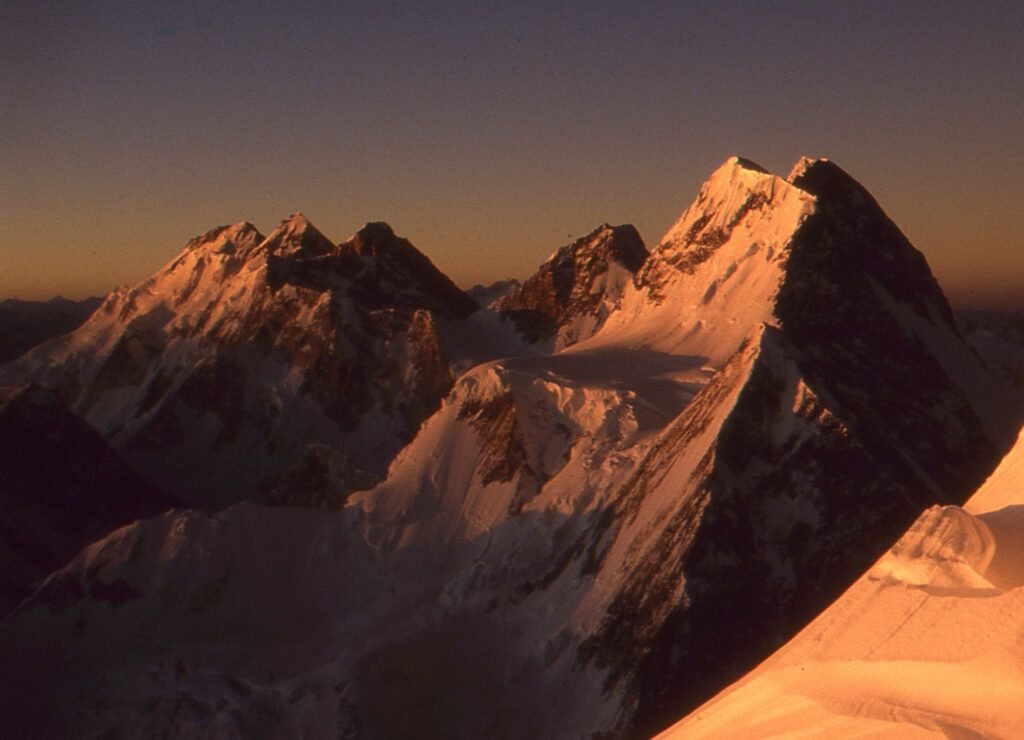
Broad Peak, known locally as Falchan Kangri — “broad peak” in the Balti language — is the world’s 12th-highest mountain and is generally regarded as one of the less technical of the 14 eight-thousanders Climbing. Accounts differ on its precise height, with ExplorersWeb citing 8,047 metres and Climbing citing 8,051 metres (26,414 feet) ExplorersWeb. Reports also diverge on timing: the Alpine Club of Pakistan’s initial release placed the avalanche around midday local time, Alpinist described it as occurring shortly before noon, while ExplorersWeb and Climbing both reported a morning event, at roughly 9:20am and 9am respectively on Thursday, 30 July Alpinist Magazine. Climbing reported that climbers’ GPS tracks showed the slide occurring between 8:57am and 9:30am, at an altitude of about 6,579 metres (21,580 feet), while ExplorersWeb placed the strike point at around 6,660 metres between Camp 2 and Camp 3. Some reporting suggested two avalanches occurred rather than a single event. Trackers showed climbers halting their ascent around 9:30am Pakistan time before falling several hundred metres; American climber Mallory Geis’s tracker recorded a sudden descent of 543 metres (1,784 feet), while Omani climber Nadhira Al Harthy’s showed a drop of 1,651 metres (5,417 feet). Alpinist reported that the GPS trackers of several missing climbers became stationary above 7,800 metres following the avalanche. Pakistani mountaineer Samson Sharaf, who shared tracker data with Climbing, said the overhang where the accident occurred was clearly visible and that most likely an entire snow-laden face had moved, sweeping across the traverse.
The people involved
The group comprised 10 climbers drawn from four separate teams: Pakistani guide Sohail Sakhi with his American client; Nirmal Purja leading an Elite Exped team; an Imagine Nepal team, whose usual leader Mingma G was absent because he was on K2 at the time; and a Seven Summit Treks group ExplorersWeb. The Alpine Club of Pakistan’s initial release described the party as five Nepalese mountaineers, one Pakistani climber, one Omani climber, one American climber, one Chinese climber and one other foreign climber, later naming them as Purja, Sakhi, five further Nepali guides, and three clients from China, Oman and the United States Climbing. Purja, who held the record for completing all 14 eight-thousand-metre peaks without supplemental oxygen, had summited Gasherbrum II less than a week earlier and wrote afterwards that Broad Peak had not originally been part of his plans, calculating only before leaving for Pakistan that adding it would leave just Cho Oyu (8,188m/26,864ft) remaining toward a second unsupported completion of all 14 peaks. He was accompanied, according to Elite Exped, by guides Pur Bahadur “Yukta” Gurung and Nima Sherpa. Other climbers named across reporting included Chinese climber Wang Zhong, Nepali guides Kili Pemba Sherpa and Nawang Thendu Sherpa, and guide Gyalu Sherpa. Sohail Sakhi, from Hunza Valley, holds a mathematics degree and had spoken previously, including to ExplorersWeb, about pay inequity facing Pakistani guides. Geis, a travel photographer from Texas, was attempting her first 8,000-metre peak, and Al Harthy, the first Omani woman to summit Everest, had said three weeks earlier that she was preparing for Broad Peak and Gasherbrum I (8,080m).
The response
Naila Kiani of the Alpine Club of Pakistan told ExplorersWeb that the organisation only learned of the avalanche at 10pm, nearly 13 hours after it struck, despite teams having staff stationed at Base Camp and other climbers often present there ExplorersWeb. ACP President Major General Irfan Arshad was reported to be in constant contact with government authorities to facilitate search and rescue, and the organisation said it was coordinating with stakeholders while monitoring the situation. Two helicopters loaded with rescuers and oxygen were scheduled to fly to Broad Peak on Friday. A press release from the Commissioner of Baltistan on 31 July confirmed recovery of the three bodies named above, with several further climbers spotted by drone but not identified Climbing. A later ACP update reported four additional bodies — Purja, Wang Zhong, Nima Sherpa and Kili Pemba Sherpa — transported to Camp 1 (5,600m/18,368ft), with one body spotted at a significantly higher location where recovery was judged too risky to attempt. Climbing reported that Sohail Sakhi, Mallory Geis, Nima Sherpa, Nawang Thendu Sherpa and Gyalu Sherpa remained unaccounted for on the mountain, and that an amputated leg, presumed to belong to one of them, had been recovered. Elite Exped confirmed Purja’s and Nima Sherpa’s deaths via Instagram on 1 August, prompting ACP President Irfan Arshad Khan to ask the company publicly to stop releasing such information until rescuers had reached the climbers. Fundraisers were subsequently launched for several of the deceased guides’ families, including by Sakhi’s friend Chris Lininger, by filmmakers Chai Vasarhelyi and Jimmy Chin, and by the Juniper Fund.
Background and context
Purja had summited 8,000-metre peaks 57 times, 29 of them without supplemental oxygen, and his record-setting climbs were documented in the Netflix film “14 Peaks: Nothing Is Impossible” Climbing. In January 2021 he was among 10 Nepali alpinists who completed the first winter ascent of K2. Following the documentary’s release, two women accused Purja of sexual assault in a 2024 New York Times feature, and a 2025 podcast series questioned some of those allegations. Among the other guides lost, Kili Pemba Sherpa had completed all 14 eight-thousanders weeks earlier, finishing with Nanga Parbat, and had helped open a route to the “true summit” of Manaslu. Pur Bahadur Gurung had climbed 8,000-metre peaks 28 times and had recently supported skier Jim Morrison’s descent of the Hornbein Couloir the previous October.
What is not yet confirmed
The precise sequence and number of avalanches remains unsettled, with some reporting describing a single slide and other accounts referring to two ExplorersWeb. The exact timing of the event is reported inconsistently across outlets, ranging from roughly 9am to midday Alpinist Magazine Climbing. The fate of Sohail Sakhi, Mallory Geis, Nima Sherpa, Nawang Thendu Sherpa and Gyalu Sherpa had not been confirmed at the time of reporting. Spellings of the American and Omani climbers’ names vary between sources, and Broad Peak’s exact elevation is given differently by ExplorersWeb and Climbing.
Sources referenced
- Updated: Ten Missing, Including Nirmal Purja, After Avalanche on Broad Peak — ExplorersWeb
- AVALANCHE: TEN CLIMBERS, INCLUDING NIRMAL PURJA, MISSING ON BROAD PEAK — Alpinist Magazine
- Who Were the 10 Climbers Caught in the Broad Peak Avalanche? — Climbing
Written by Andoram by combining 3 independently published reports, each linked above. We synthesise facts and reproduce no source text.
Coverage timeline
- Renowned Nepali mountaineer Nirmal Purja among missing climbers after avalanche on Broad Peak — Euronews, 31 Jul 2026, 07:00 UTC
- Renowned Nepalese Mountaineer Nirmal Purja Among 10 Missing In PoK Avalanche — NDTV, 31 Jul 2026, 07:00 UTC
- Renowned Nepali climber Nirmal Purja among 10 missing after avalanche — Euronews.com, 31 Jul 2026, 07:00 UTC
This page is an automatically compiled index of third-party reporting. Headlines and links belong to their publishers; Andoram reproduces no article text. Last compiled 17 Aug 2026 16:15 UTC.